From Crazy to Calm – Lake Superior April weather really covered all the bases this year. We had snow, cold, warm, rain, wind and gorgeous. The big April Gale on the 14th and 15th was a highlight for sure. The northeast winds brought massive waves crashing along the shore. some of the best places to watch a northeast gale are in the Split Rock and Tettegouche areas. The cliffs in the area can make for dramatic scenes from the waves crashing and rebounding off the cliff faces. Even a smaller gale can be impressive against these walls. This particular gale wasn’t accompanied by much precipitation which made for a fun day of photographing the waves. Often times, these gales come with heavy rain or snow which can hinder photographing them a bit.
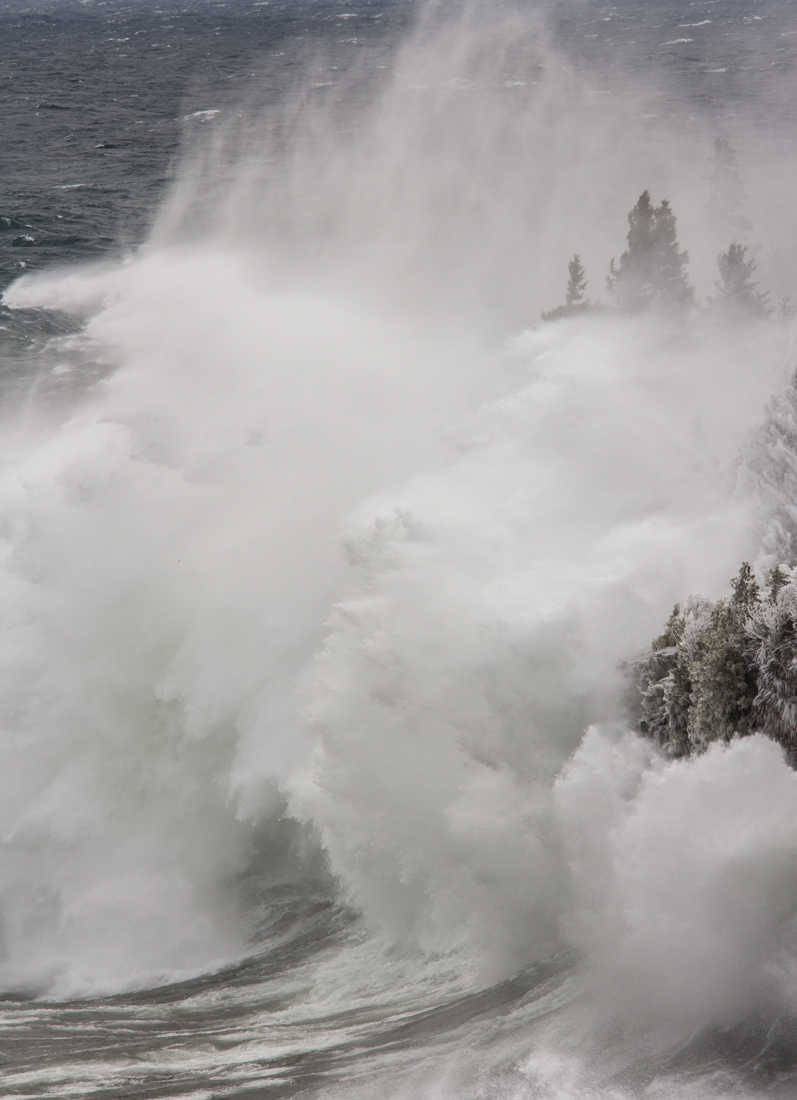
Crashing waves at Tettegouche State Park – 4/14/2018Massive splash on the cliffs along Lake Superior. Wave height was in the mid teens but splash heights were reaching 100 feet, 150 feet and more in places.The ice coated trees take a beating in this little lake side forest at Tettegouche State Park.
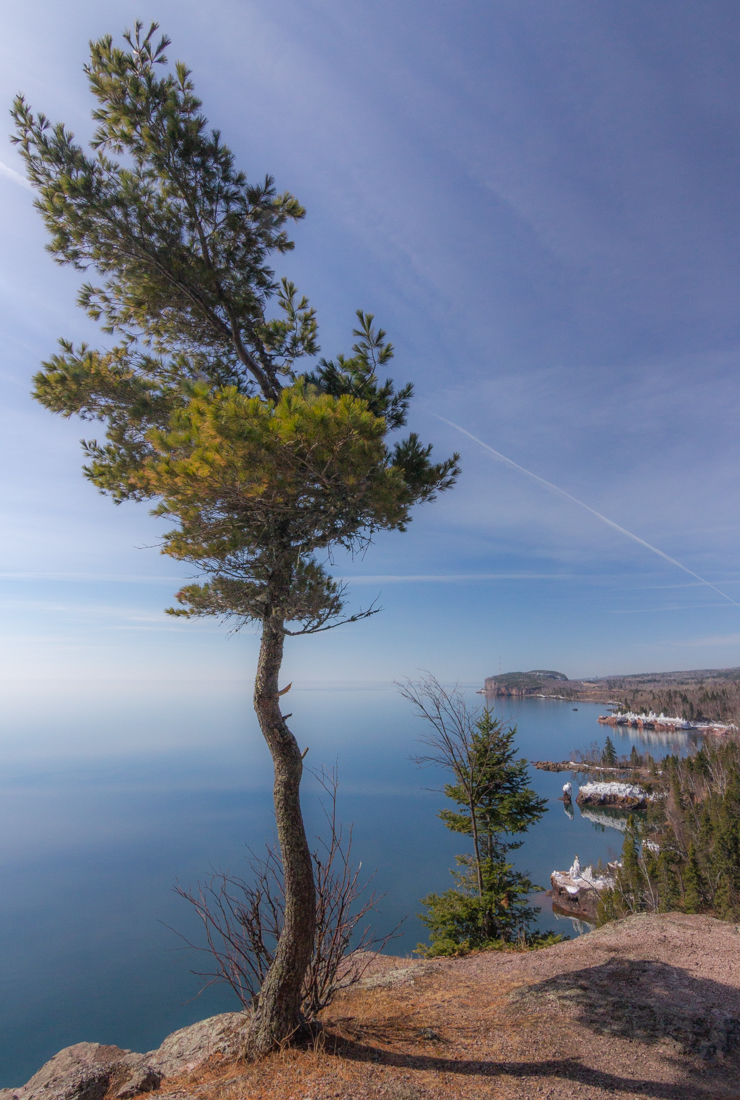
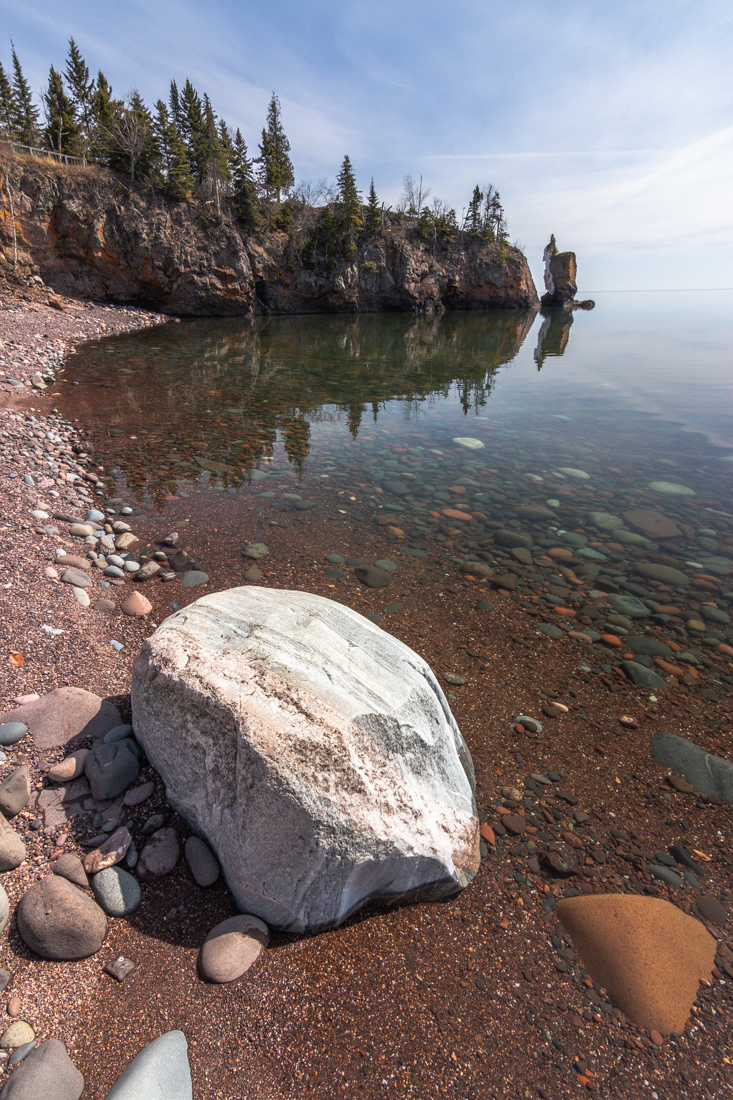
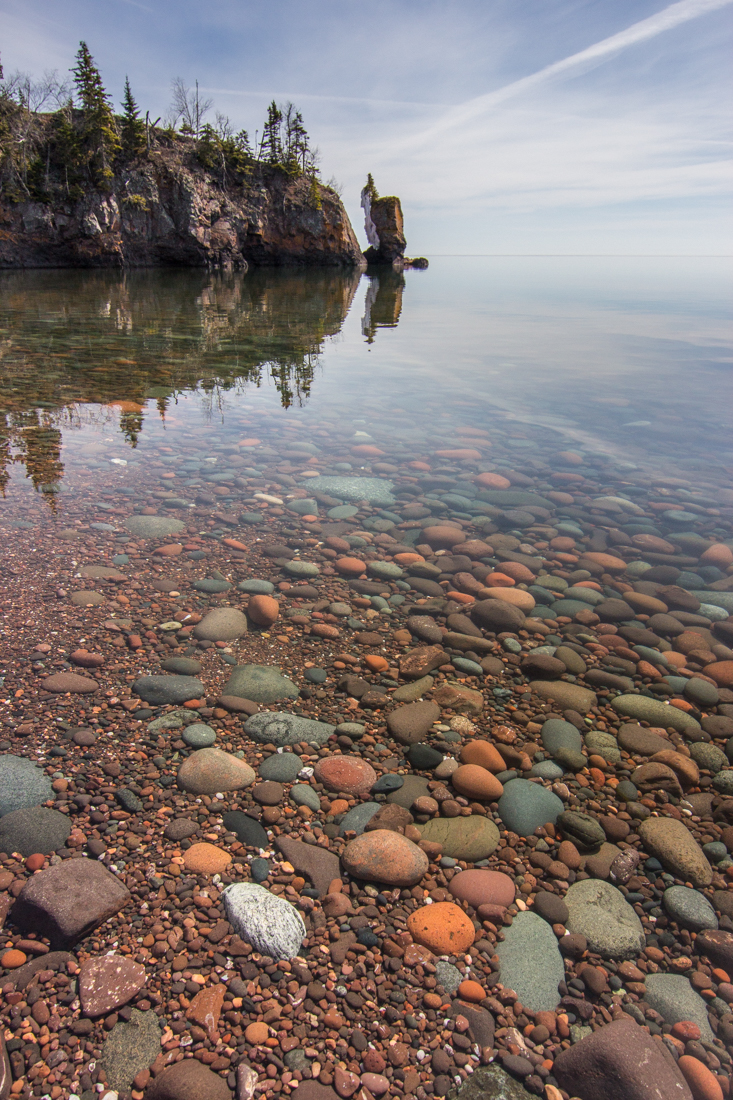
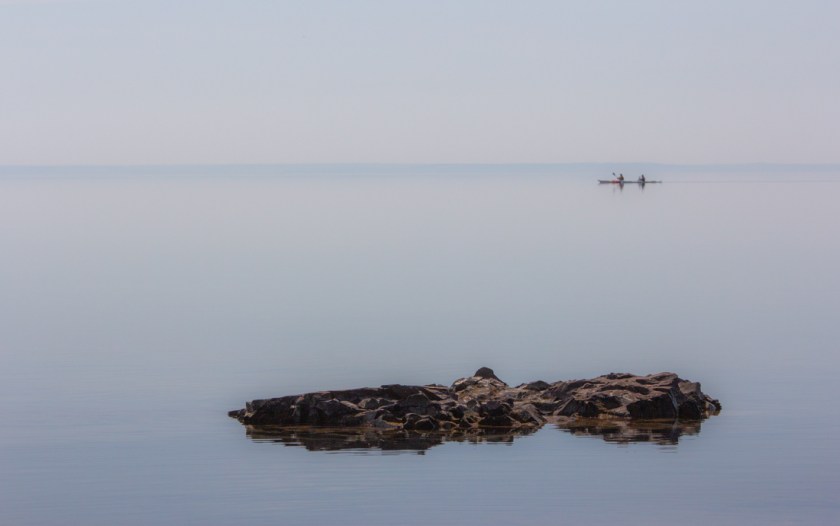
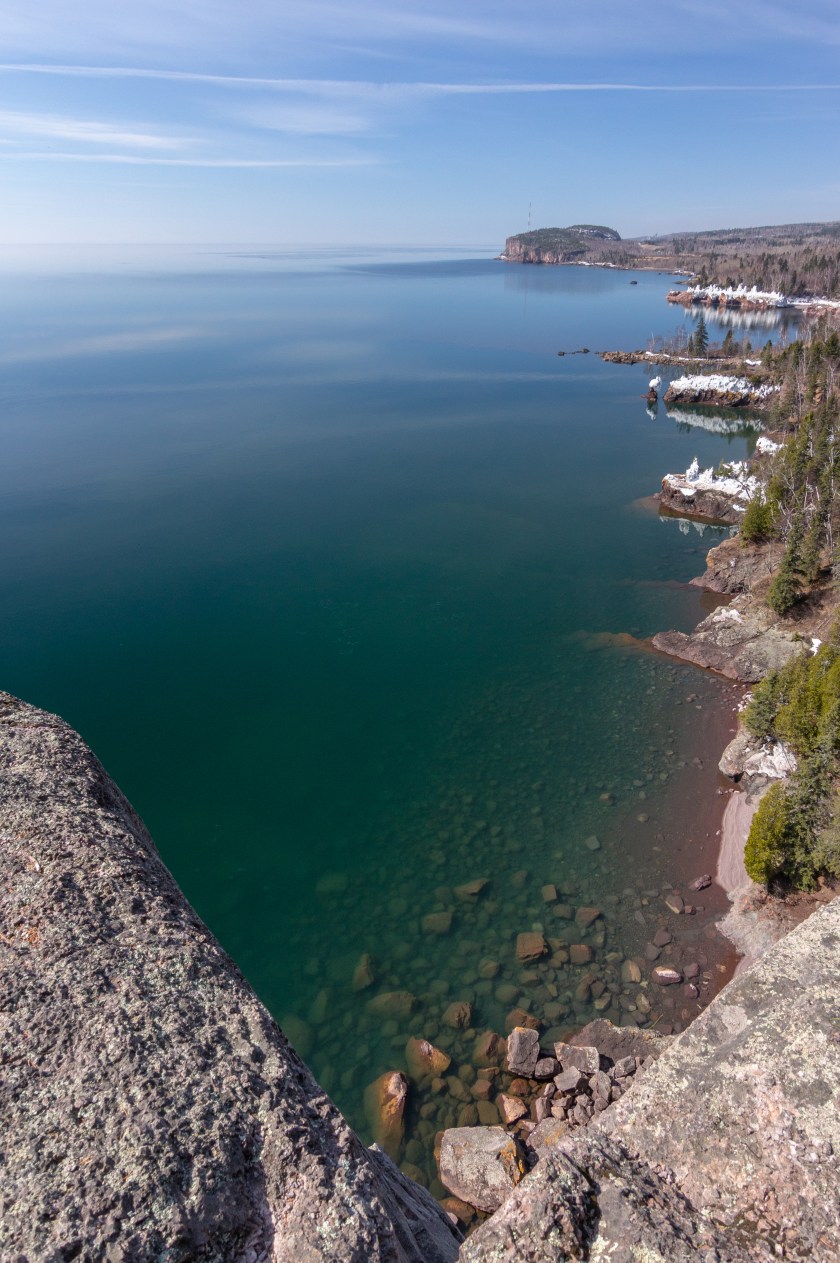
The calm clear views from Tettegouche State Park and Split Rock Lighthouse State Park one week after the gales…
Earth Day was a picture perfect day to be outside in our State Parks. I made it a point to hit three in my travels that day. The calm, clear day was a huge contrast to the chaos of the previous week. Keep a circular polarizing filter in your camera bag. They are great for days like these. They can help you see into the water even more by removing some glare. They will also help create more contrast between blue sky and white clouds. A valuable tool to use in many photography conditions.
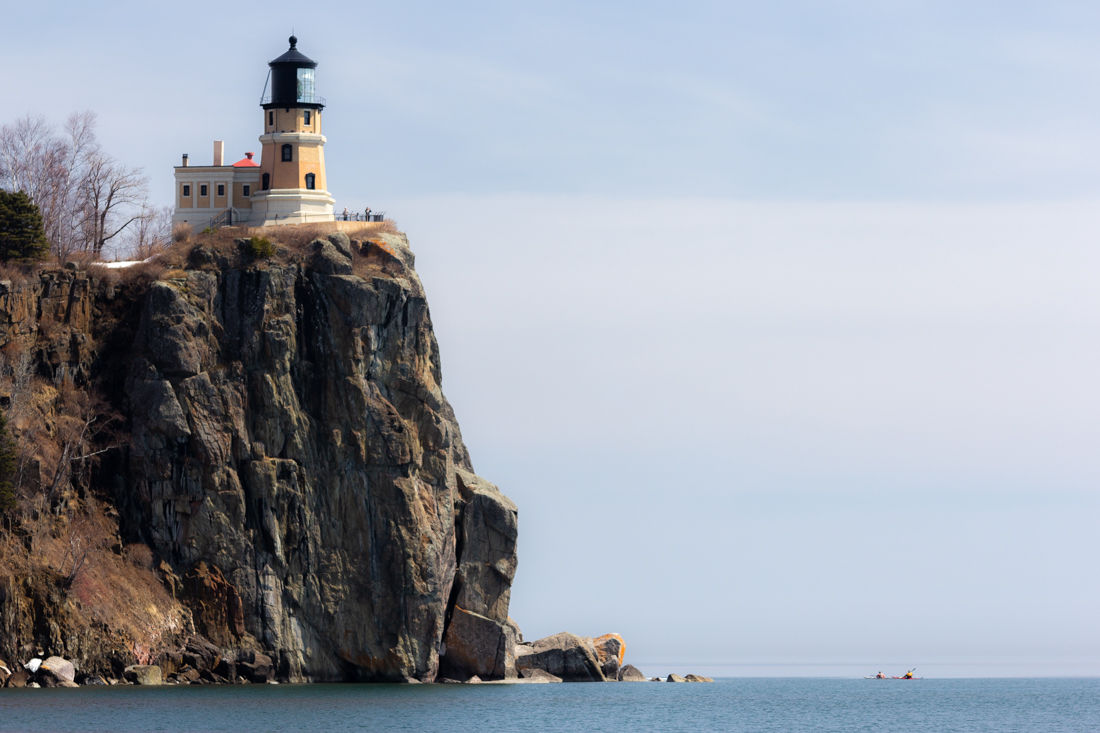
Lone tree on Shovel Point – Lake SUperior, MNBeachside at Tettegouche State ParkClear, Calm, BeautifulA view of Shovel PointSplit Rock LighthouseKayaking on the calmest of lakes…Split Rock ReflectionsKayakers passing by Split Rock Lighthouse.The view from Shovel Point looking towards Palisade HeadStack Reflections
April Northern Lights – An All Nighter
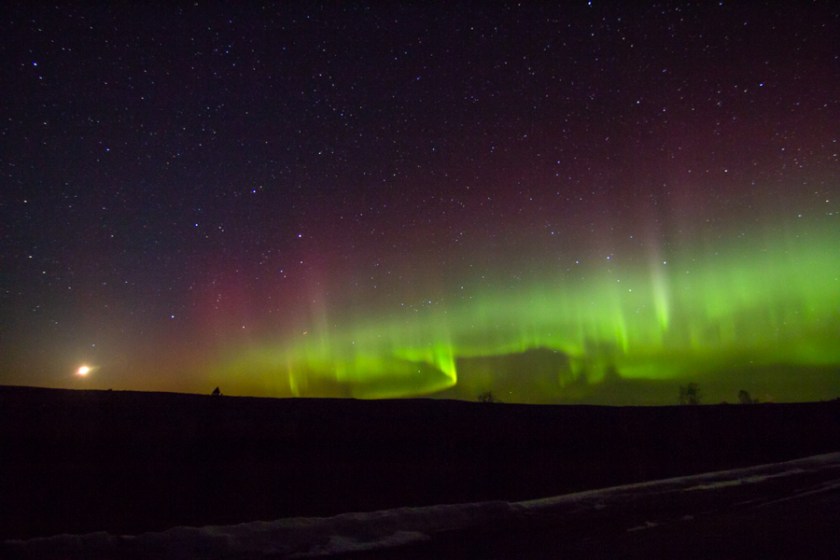
April Aurora And The Setting Moon – 4/20/2018
The night and morning hours on April 19th and 20th produced a rather remarkable northern lights display. What started out as a faint glow for almost two hours, erupted into shimmering sheets and dancing waves of aurora which lasted until morning light. I put in a 4 1/2 hour shift of sky watching and photographing the lights. The slideshow shows you the progression, in a way, from around 10:00 PM CST on April 19th until around 1:00AM on April 20th. When the lights are strong, I have a pretty good view of the dark, northern skies from home. I spent another hour or two watching from the deck and even out the windows.
While there is no way to truely predict a good aurora display, you can do a few things to help alert you. Space Weather dot com is a great resource which can alert you via email when solar activity may cause aurora. They have a great photo gallery and information on all things space and sky related. Another resource are regional aurora “hunter” groups. These groups are full of entusiasts who will report in real time when the aurora are visible in your area. Great Lakes Aurora Hunters is a good one for my area. As far as viewing in Cook County, one needs to know that viewing with the naked eye and photographing the aurora can be two entirely different experiences. I won’t go into detail in this post, but our cameras see in the dark much, much better than we do, to make it short. So for viewing, you’ll want to get over the hills and into the darkest areas, away from towns, resorts, cabin lights. The overlook just past the Britton Peak parking area on the Sawbill Trail, just a few miles off highway 61 is a fantastic place to watch from a car or lawn chair. It has the best, widest northern view you can drive to that I know of. If you aren’t in Tofte, go up one of the “trails”, Gunflint, Caribou, Arrowhead, Cramer Road, and find a north facing lake, boat landing or hillside. Our dark skies won’t disappoint during a northern lights storm. For photography, I like to find a river, lake, or other point of interest for foreground attention and a sense of place or location. The scene becomes more important to convey the feeling, maybe, moreso than seeing the entire sky and display. If you have never seen the northern lights, and are not interested in taking photos, you’ll want to just stay put once you find a big, wide northern view. Hope this helps you see the aurora someday on the North Shore!
This slideshow requires JavaScript.
April Wildlife
It was a good month in the woods for wildlife. From grouse to lynx to moose and loons!
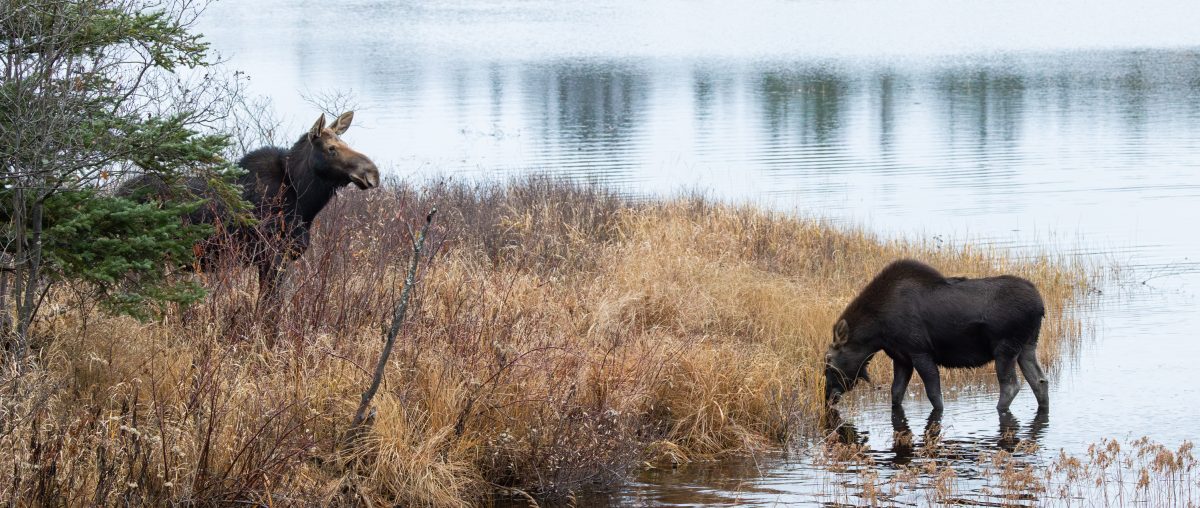
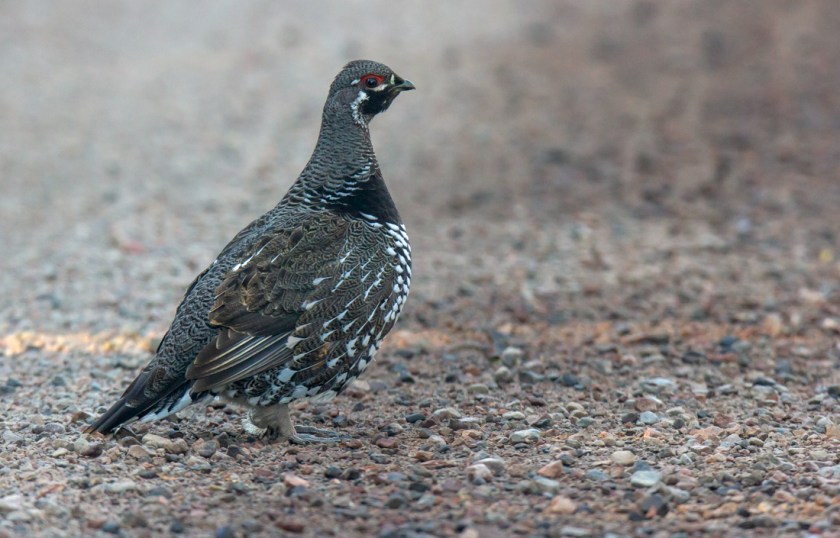
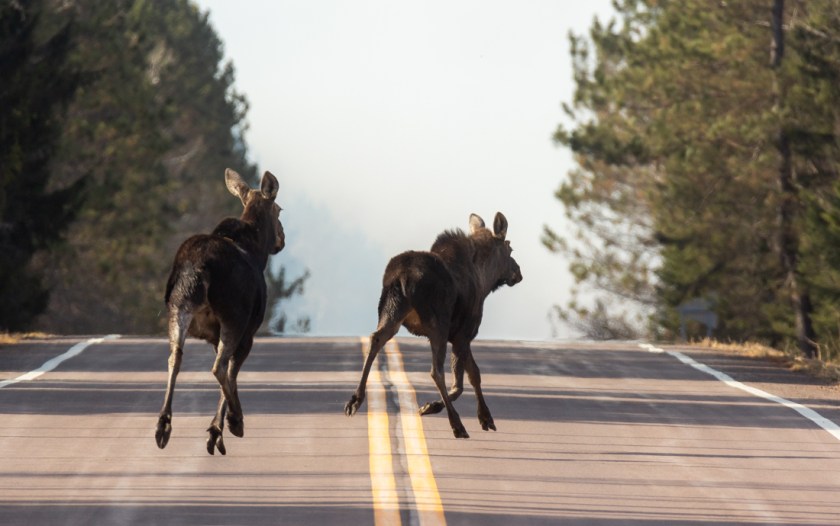
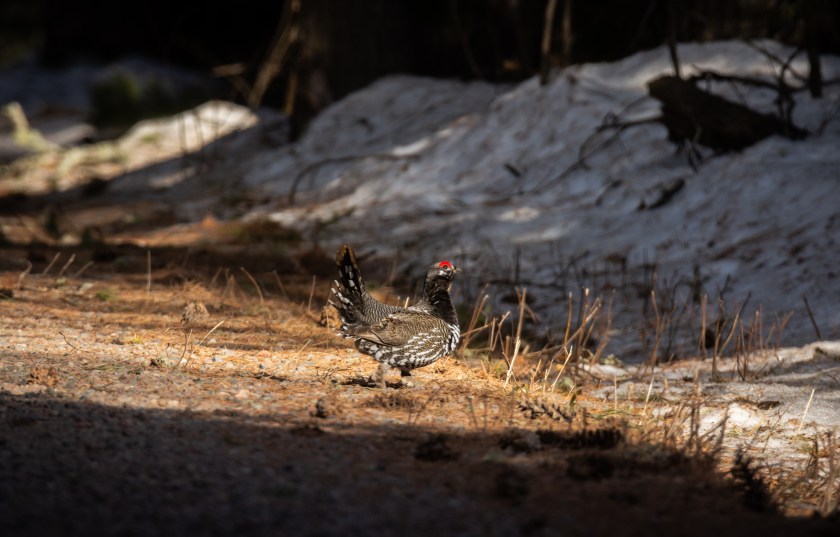
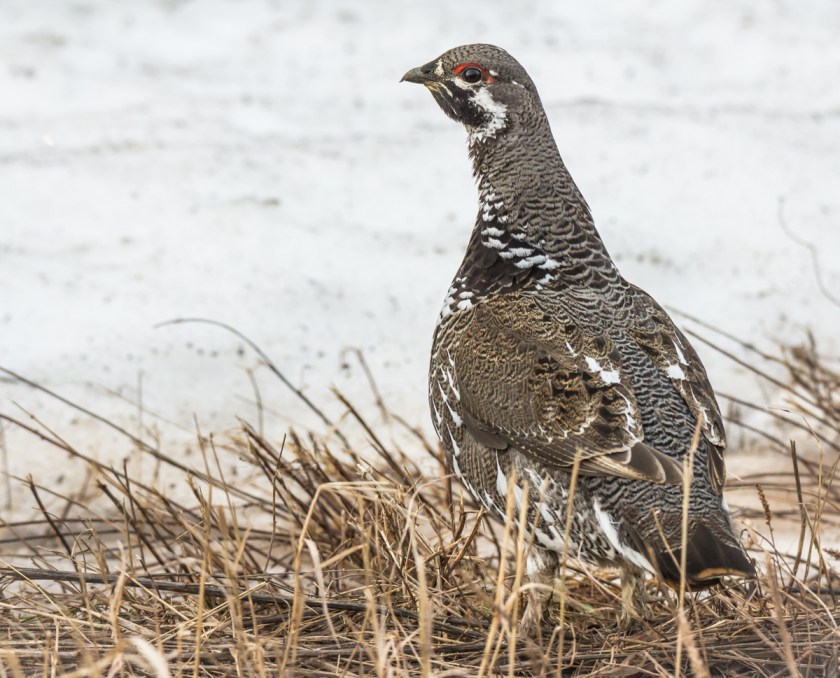
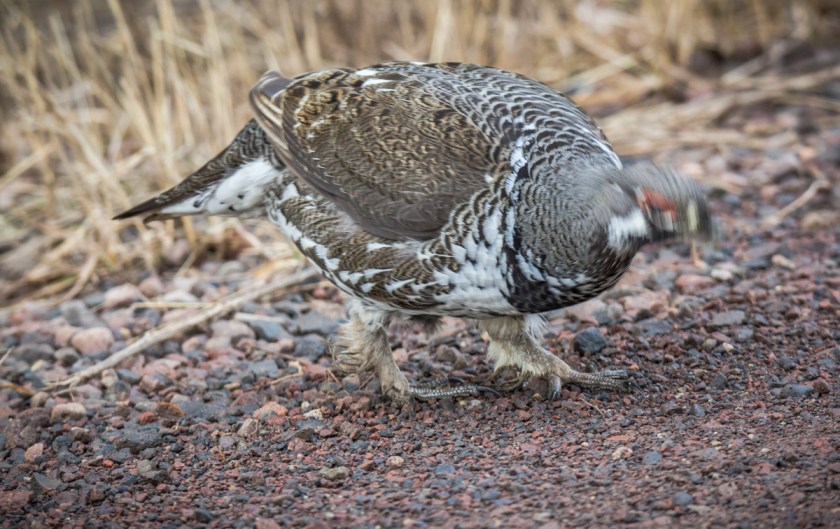
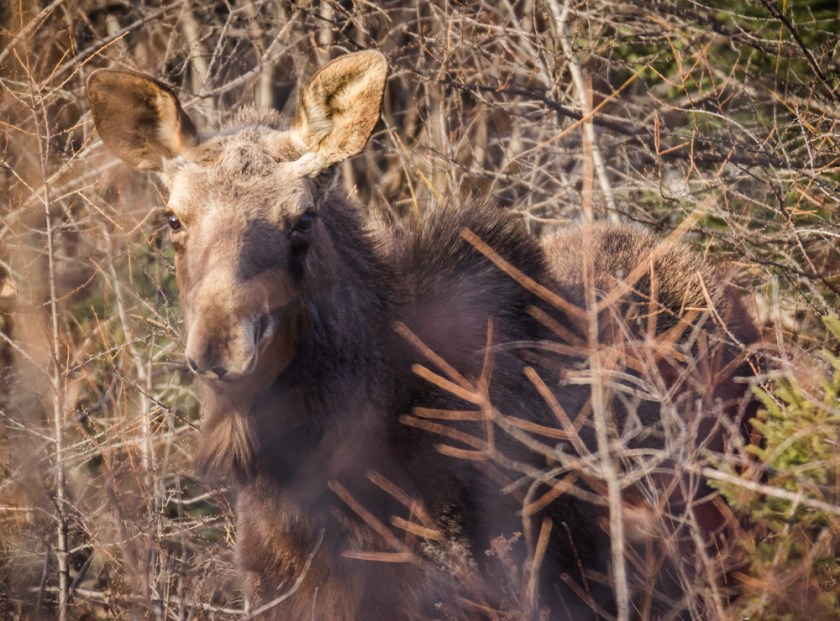
Spruce grouse could be found most mornings pecking for roadside gravel. I have heard some drumming this spring, but not much. Moose sightings were few. I did manage to snap a few recent photos though. Two very healthy looking moose together at the end of the month.
Female spruce grouse – April in Superior National ForestMale spruce grouse – Superior National ForestWhiskey Jack or Canada Jay – Superior National Forest
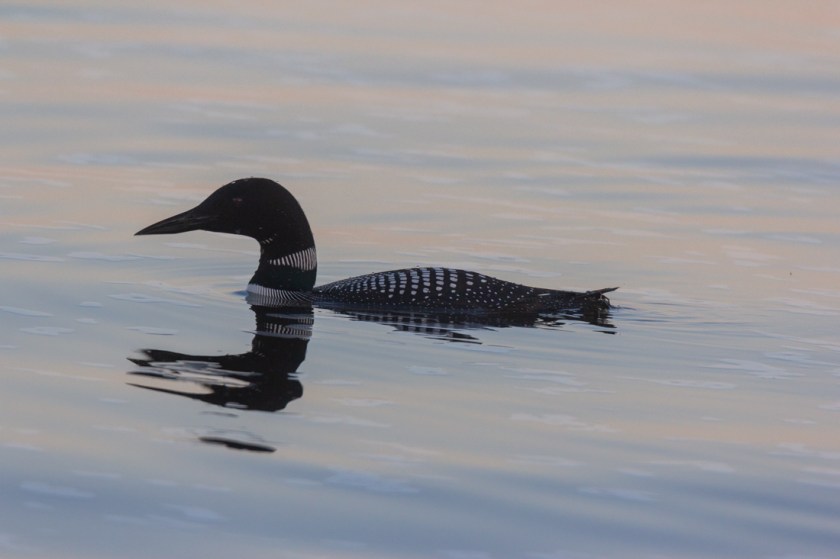
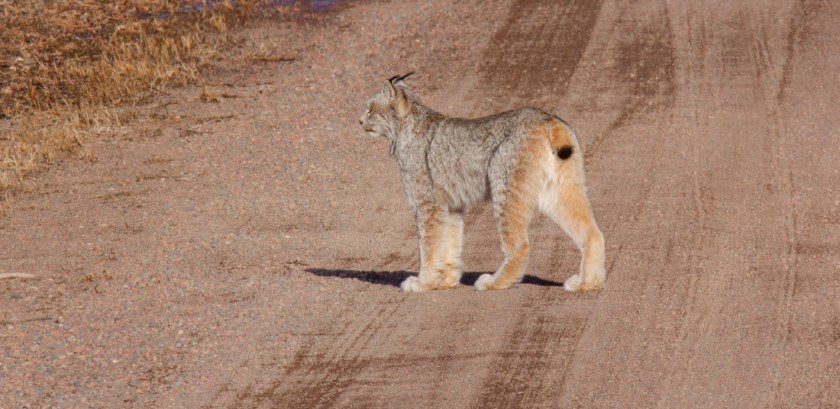
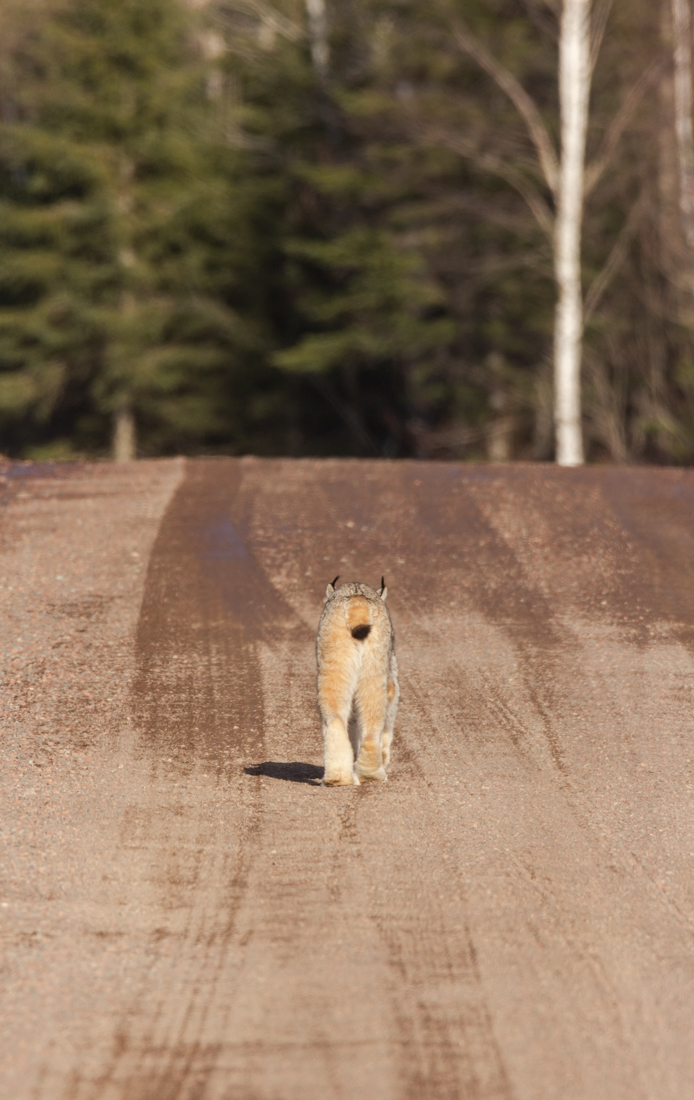
Turkey vulture and the nearly full April moon.Though I had heard loons the previous week, this was the first one I actually saw close enough to get a photo. Always a fun spring “first”.A pair of moose on the run in Cook County.And gone, into the woods.One would emerge, briefly, and gone again!I had a late afternoon encounter with 3 lynx in earlier April. I saw each one alone, about a mile apart from each other. Something tells me this was 3 of the 4 kittens I had been seeing earlier in winter with the mother. Once the mother mates again, the kittens are set off on their own to figure out how to hunt and survive alone. The size and proximity to one another tells me this is the same family, now entering the next phase of their lives as solitary animals.A lone lynx prowls for an afternoon mealGrouse – Superior National ForestMale Spruce Grouse – Superior National Forest
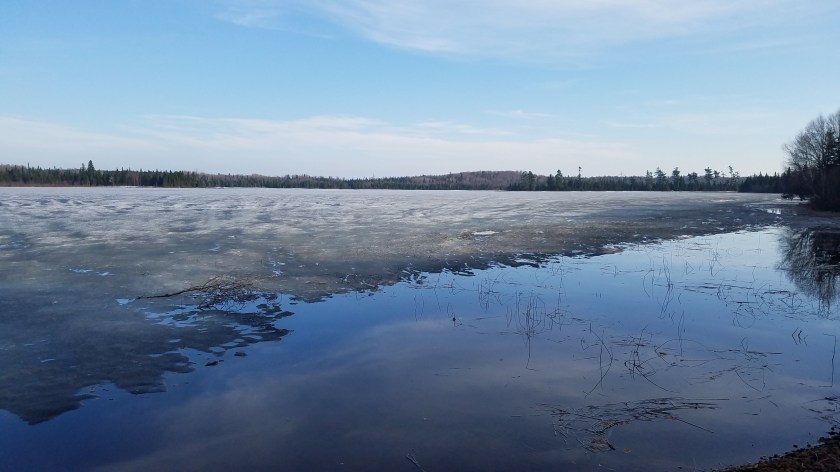
Last year at this time we had already been on the lakes for almost two weeks. Now, we are still waiting for the thaw. The lakes still have a foot or more of ice on them in some areas. Recent warmer weather is helping to speed things along and I think we will see open lakes in the coming days. Fishing opener is near and I hope you’ll tune in again for all things May in my next post. Please subscribe so you’ll be notified when I post again.
Current conditions on local lakes as of 5/2/2018 – Little ways to go for that Fishing opener! 😉
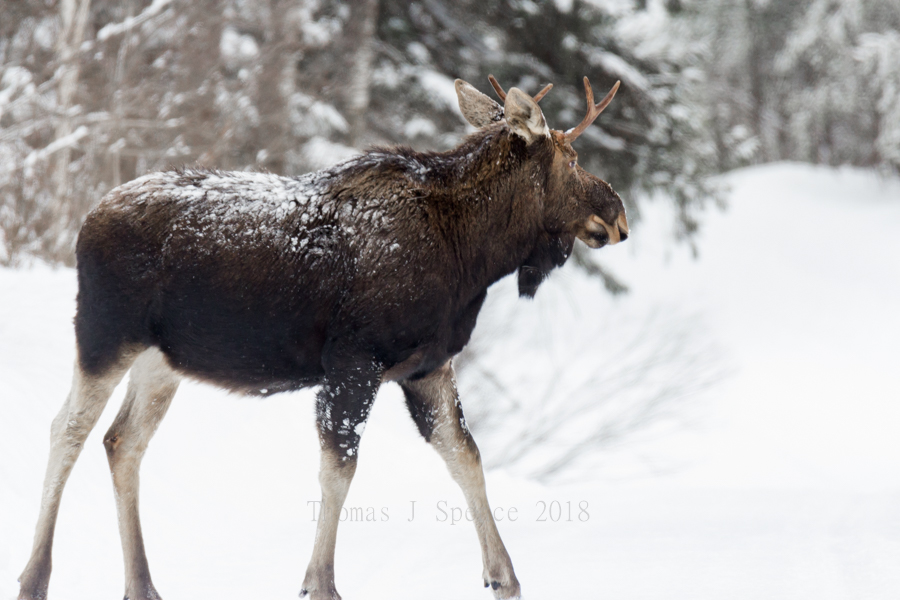
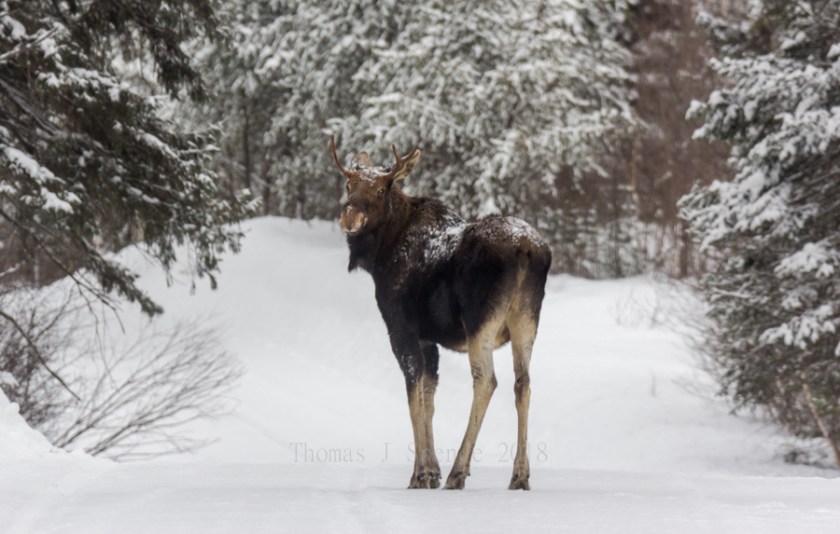
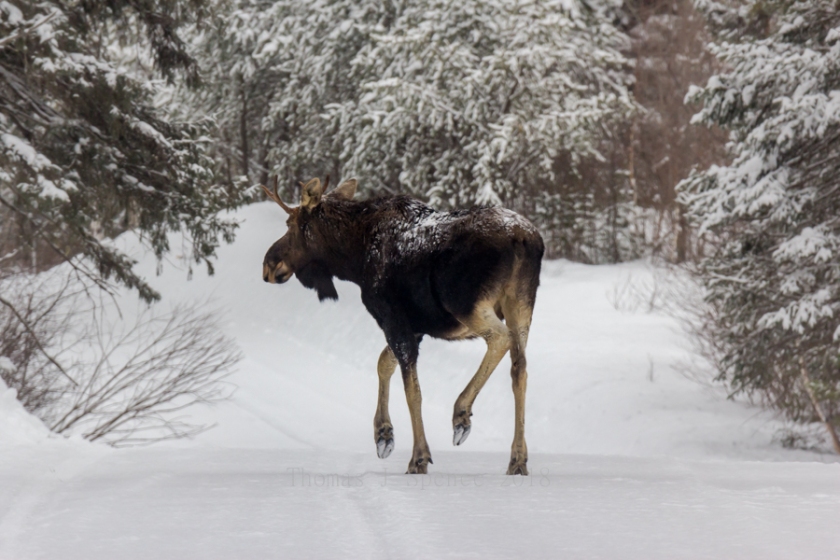
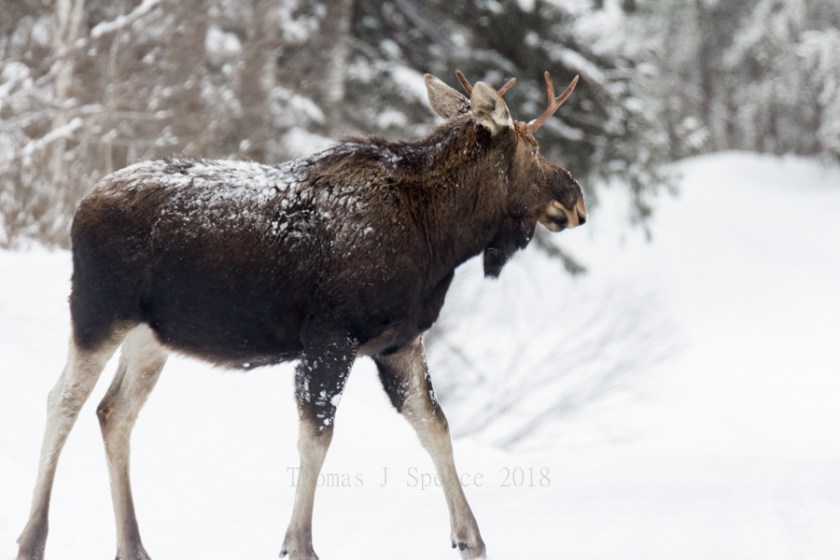
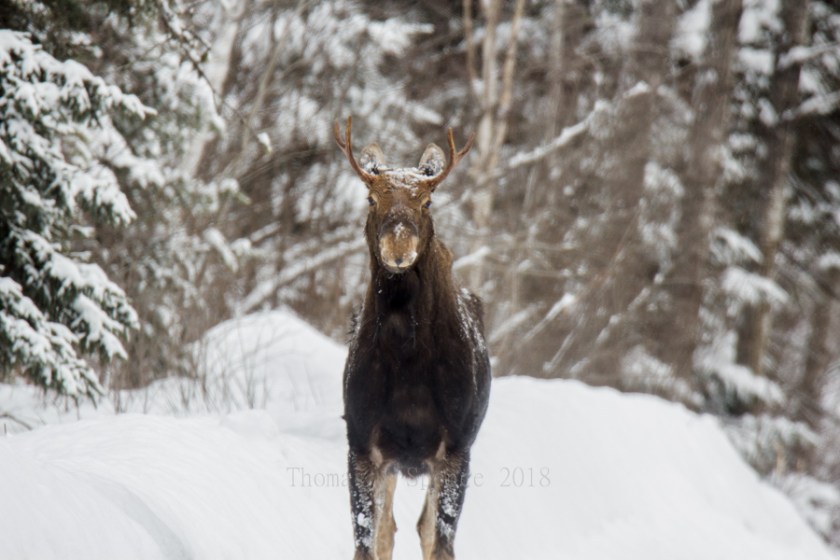
I hadn’t had a good moose sighting in quite some time. A couple quick, blurred flashes of black in the distance, but nothing identifiable or photographable. Late February was better though! Here are some photos of a nice, healthy looking yearling bull moose. He and I had a nice standoff and photoshoot before he took off into the newly fallen snow, deeper into the woods. The bull moose will shed their antlers anytime between November and March. Larger, older male moose have likely lost their antlers by early and mid winter, but the youngest moose can hold them into February and March. This was the latest I had personally seen a moose with headgear. February 23rd, 2018. At first, I thought the rack was bigger but it turned out to be it’s ear I was seeing! This is a yearling bull moose and I hope to run into him when he’s older.
Bull moose in fresh snowfall – Superior National Forest – Feb. 2018
Doin’ a little dance. Those hooves…
Yearling bull holding antlers in late February – Minnesota
Yearling bull moose with antlers in late February – Minnesota
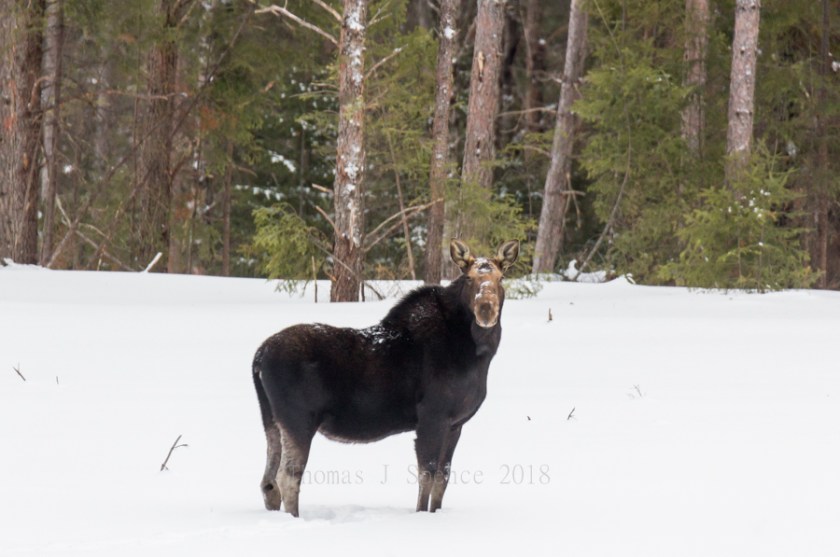
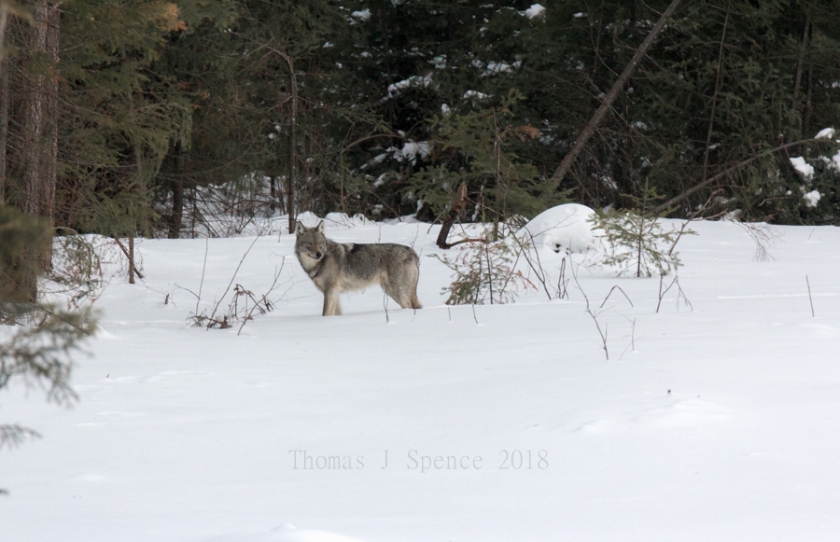
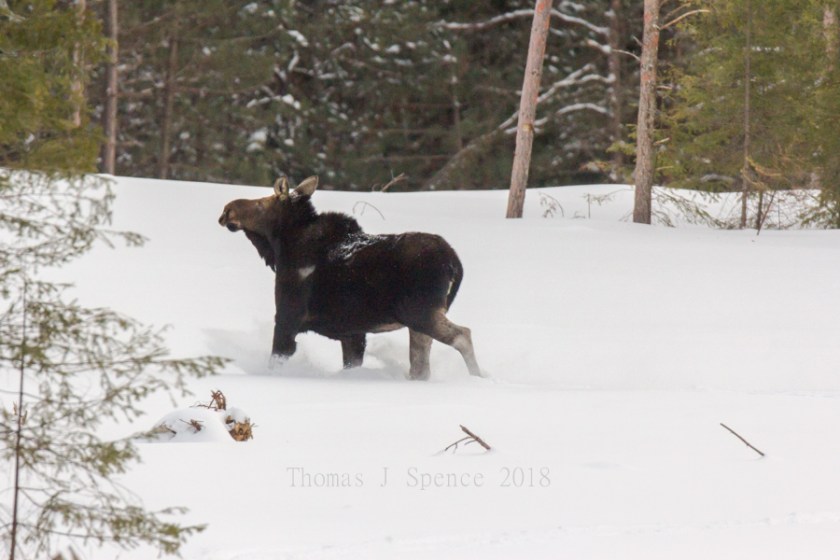
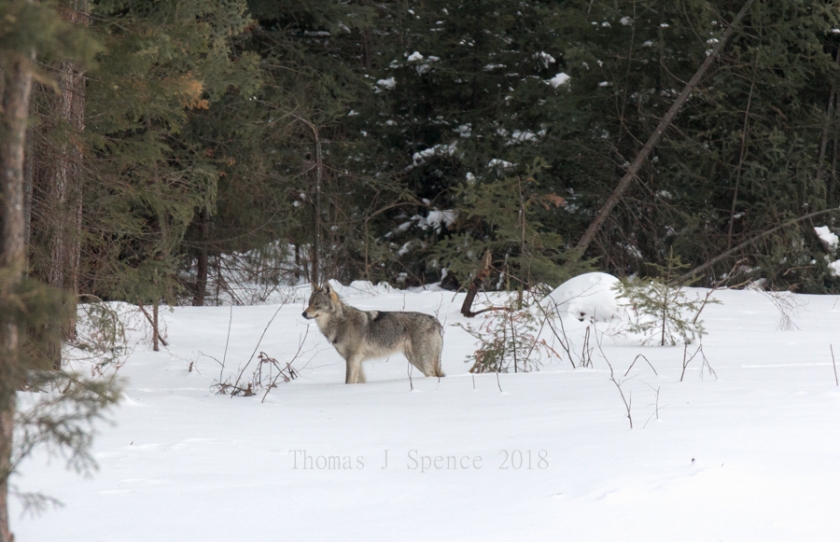
Then there was the cow moose… When I saw her, she was standing still with hair raised. She did not stick around long and I was pretty far off in the distance. She ran within seconds of me stopping, running through the deep, new snow. First tracks. I thought she would reappear on the other side of the clearing, so I waited. She looked to be pregnant, and hopefully with twins! She would be about five of eight months along right now. Usually they give birth in May to one, two, and even three!!! calves at times. About 15 minutes passed when I saw motion in the woods near where the cow went in. She had company, and who knows how long they were on here tail. Hope she is still out there fighting the good fight. Here are a few photos I got right at sunset. night was falling and the wolves didn’t look like they were in a big hurry. Mama was healthy looking.
If you enjoy these posts, you can subscribe by using the tool on the sidebar or bottom of the page. Thanks!
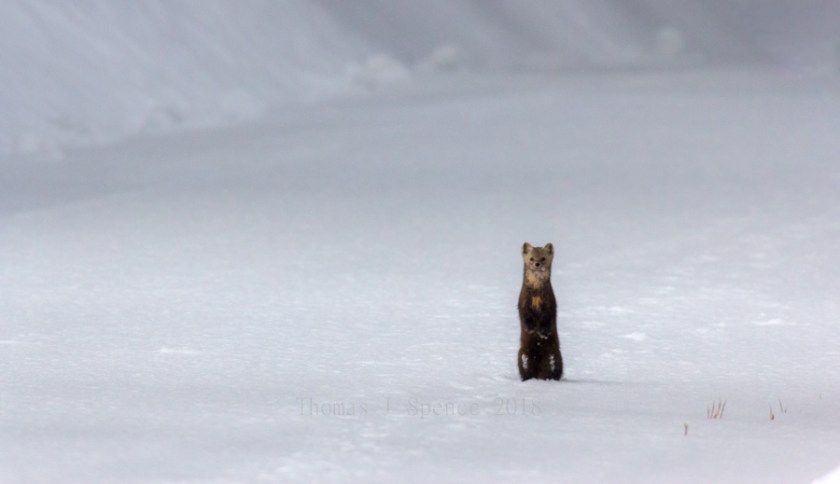
What appears to be a pregnant cow moose in Superior National Forest. She should be about 5 months along by now, usually giving birth in May. She had company about 15 minutes behind her.Following mother moose by 15 minutes…With hair standing up, mother moose had been on the run for a bit. A pack of 3 wolves were close behind.Hot pursuit – just 15 minutes after I saw the moose, the wolves moved in.Two of the three, sniffing the tracks of the pregnant cow moose as the sun set and night falls…And a pine marten just for fun!
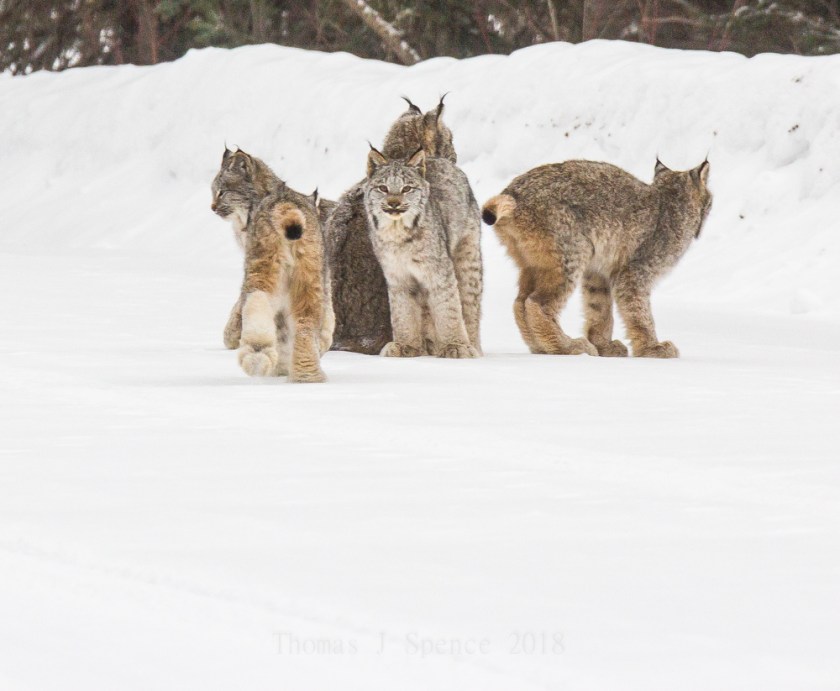
We don’t often see the Canada lynx in our woods, so we tend to cherish the brief glimpses we get. I’ll share a few of those brief glimpses I have had in recent months and a full set of photos from a recent, unbelievable lynx encounter with a family of five. I’ll also add a few comments that could help you prolong and enrich your photo excursions into the woods if you encounter wildlife from your vehicle.
Five Canada Lynx on the prowl in the forest…
The population of lynx in our forest tends to fluctuate with the population of the snowshoe hare, the primary food source for the lynx. Hare seem to be plentiful in the woods this winter. Lynx will also dine on grouse and other small critters like mice and squirrel. I have been seeing a lot of grouse and hare in recent months and my lynx sightings have increased this winter for sure. I have had many fun grouse photos this year. The hare photos below are from last year.
Ruffed Grouse all puffed up on a cold afternoon.
Spruce Grouse in January
Snowshoe hare – Look at those shoes!
Hare in the snow
You really never know when a great wildlife sighting will occur. This past summer I had a very close, brief encounter with a lynx at a boat landing. I had just finished canoeing on a remote, inland lake and was tying the canoe onto the truck. I came around the back to sit on the tailgate for a minute and as I rounded the back of the truck, a Canada lynx walked right by the back of the truck and past me. It was within 10 feet of the truck. It walked slowly by and looked at me like I wasn’t even there. I rushed to grab a camera and was able to snap a couple quick shots before it disappeared into the woods. Although my camera was in the truck, it was ready to go with a long lens for wildlife and settings for the light of day. I always keep the long lens on my camera when I am driving hiking, canoeing. If I want to shoot landscapes, and wide angle, I can always switch lenses for that. You won’t have the time to change to your long lens if a moose or a lynx walks out of the woods, most of the time.
Summer lynx – a fleeting chance and an off center snap as it slinks into the woods…
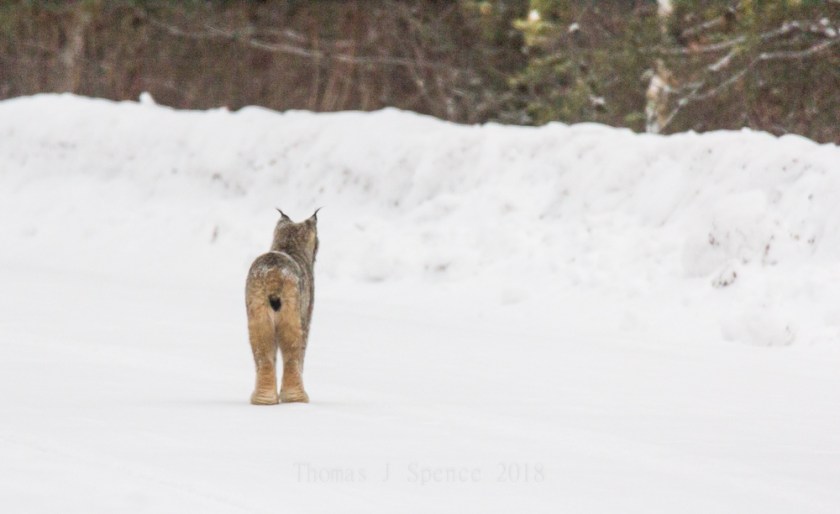
I don’t know a lot about the lynx, as I just don’t see them a lot and they aren’t always on my radar. I am learning more this winter and with this recent experience, though. I have had a couple encounters this winter just prior to the family group. Below is a recent lynx photo shot from waaaaaaayyyy down the road. I could have tried driving up closer to take shots, but that rarely works out with wildlife. Slowly pull over and shut off your vehicle whenever possible. I tend to assess the situation quickly to determine if my subject is about to run, or if they are going to be comfortable enough for a photo shoot. Sometimes you get close, and sometimes you just have to take the long, landscape type shot.
Canada Lynx Roadblock – Winter 2018 in Superior National Forest
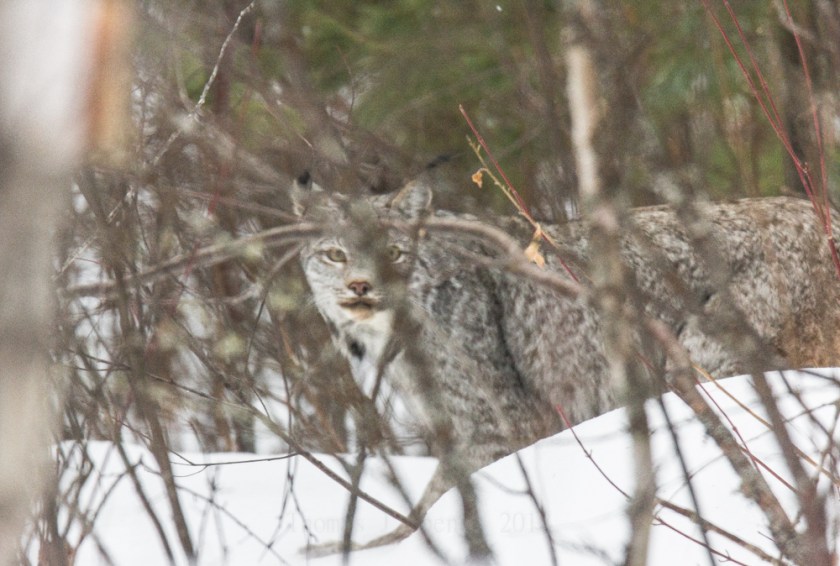
Often times, if you are lucky enough to see one cross a road in a flash, they will lurk in the woods not too far off the road and offer you a quick glimpse through the trees. While they avoid us when they can, they seem to be curious like any cat and not necessarily threatened by us. Another step you can take to prolong a wildlife experience is to stay still and don’t wander too far from your vehicle. The animal may already be nervous about the car, now with a couple people out milling about in the road you tend to look like a pack of predators. Sometimes the wildlife won’t seem to mind our presence, but more often than not, they do.
Briefly through the brush – Winter 2018 in Superior National Forest
On the morning of February 3rd, a very cold, sub-zero morning, I headed out to look for grouse and a possible moose to photograph. I had been seeing moose tracks in a few different areas in recent days and weeks. I had an uneventful morning and was retracing my drive after turning around and heading back home. As I rounded a corner I had just driven by minutes ago, I saw a solitary wildcat in the middle of the road.
Lone Canada lynx stares into the woods…
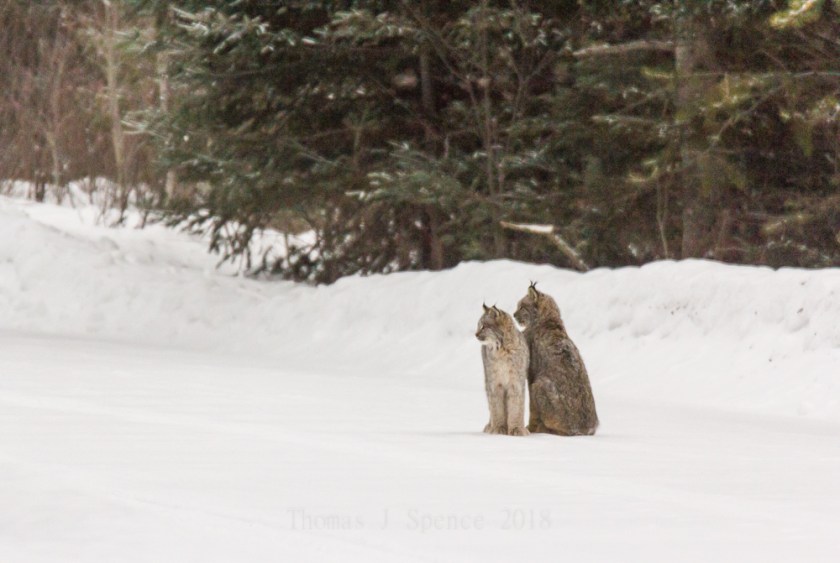
I was able to pull off and shut the truck off without scaring the cat off. I was amazed. It was immediately evident that it wasn’t put out by my presence. It was locked on the woods and sat down in the middle of the road as I planted myself in a snowbank just in front of my truck. I was certain this forest feline was honed in on a hare. I waited for the action. To my surprise and amazement, a second cat came over the snowbank and onto the road to join the other lynx.
A second, smaller lynx joins the first…Two lynx in the road…
The two lynx interacted for a bit. It was obvious that there was a size difference and there was a difference in attitude in the two as well. The second was more playful, curious and energetic, it seemed. The larger cat still seemed intent on the woods. Never really moving much and paying me little attention. The smaller cat was a bit unsure of me at times.
Two Canada Lynx in the Minnesota Woods – One a little more curious than the other…Two Canada Lynx in the Minnesota Woods – Paying attention to the woods in front of them…Two Canada Lynx in the Minnesota Woods – Number 2 is a little unsure…
I knew the opportunity could end any second, and I didn’t have a lot of light to work with, but the subjects were cooperating so well! I couldn’t believe it! I boosted the ISO a little and tried to remain still while I took pictures. The two at one point locked on to something in the woods and stared for a few seconds. I thought about switching to video, but the tripod was in the truck and I knew with the long lens it would be shaky at best. My cell phone was in the truck charging or it would have made great video.
The pair of lynx are locked onto something in the woods. I wait for what’s to come…
With the camera to my eye, aimed at the pair, I notice movement and realize there are more cats entering the road from the woods. I took a few photos and lowered the camera and watched, amazed.
A third and fourth lynx join the scene…
One, two, three, four…
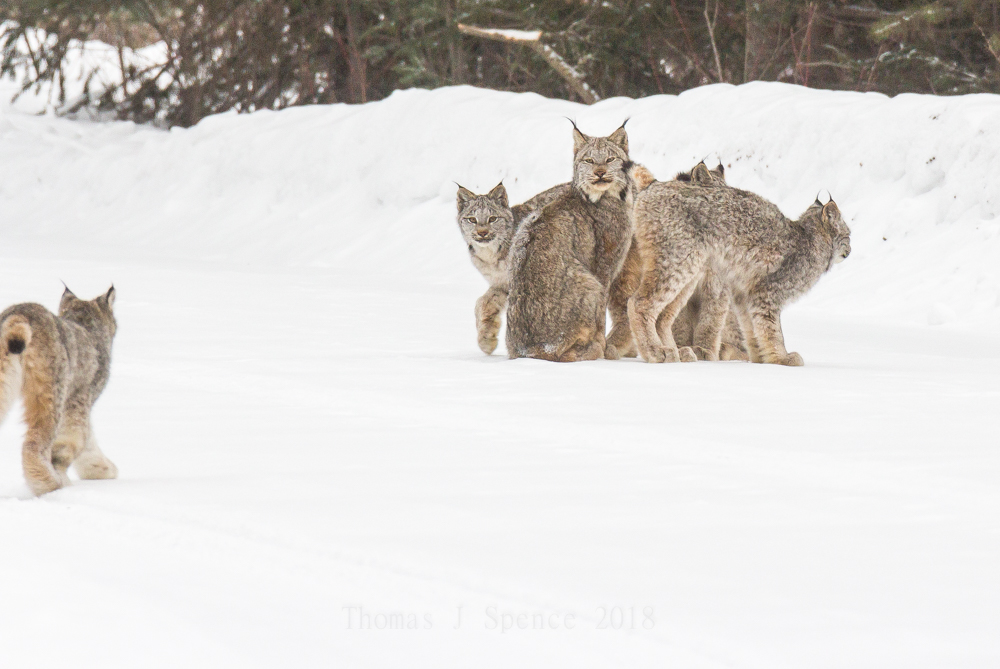
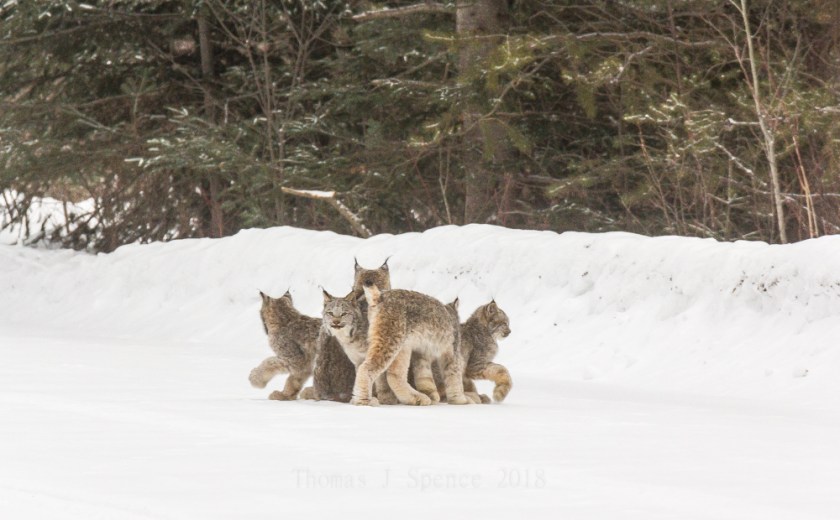
Right away I noticed the difference in size between the first lynx and the three who joined. The three were smaller than the first and similar in size to each other. The four cats nuzzled, cuddled and circled with the larger cat. At this point i’m thinking it’s a family unit, but know so little about them. They seemed to check in with and not stray far from the larger, adult cat when in the road. They stayed in a tight group together.
4 Canada Lynx checking me out in Superior National Forest
Always seemed like they were watching in all directions, as a group.The smaller kittens were a little curious, but playful.
The four cats milled about, circled, checked me out a bit. It seems like they were curious, but also attentive to all directions around them. When they grouped up in the road, in the open, they got in a pile and were all looking in different directions it seemed. 360 view. Maybe I am imagining that, but when I look at the photos it looks like that is what they were doing. Maybe the fact that they were in an open clearing(roadway) and my presence triggered an instinct they have as a family unit? Huddle together to look larger and watch in all directions while we are exposed in the open. Anyway, that’s what I observed.
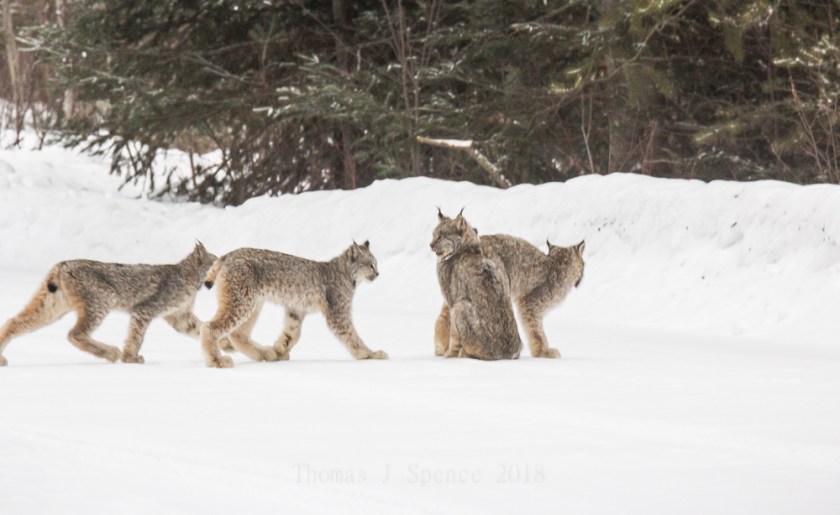
As I was photographing and watching the group of four another animal appears!! Number 5 enters the scene and explains what the others were still looking at in the woods. Looking for their other sibling. It’s now fairly certain this is a mother and 4 kittens nearing a year old. I have since learned that this is the time of year that the lynx will mate. At that time, almost year old kittens will go out on their own, away from mother. It’s known that a mother lynx will have up to 6 or so kittens and will teach them to hunt and nurture them for their first 9 months or so. It’s great to see that 4 healthy looking lynx have made it almost through their first winter and are strong and smart enough to be on their own. Here are some of the shots of the group of 5 Canada lynx.
A 5th lynx enters the scene!number 5, another smaller cat, joins the gang in the road.Still a little unsure about me over in the snowbank….It seemed like one was almost always watching me. It was like a group defence posture to look large and watch in all directions when out in the open. At least that’s my theory.One final group pose and cuddle huddle before continuing on up the road.
Whenever I can I get out of the vehicle for roadside wildlife photography, especially in winter. The heat from the truck can cause blurry waves as it hits the cold outside air and can make photos difficult. Also any vibrations can cause problems. If you have to shoot from a vehicle in winter, try to keep the heat down and open other windows to balance the temperature when shooting. That will reduce heat blur. Some will use a beanbag type setup on their window or door for comfort and balance. I find it too constricting and tough to make a good composition from a car, so I avoid it at all costs. I’m not sure I could have captured this encounter as thoroughly from the truck window. It always just feels better to be out there, too. I often snowshoe or hike to look for wildlife in winter, but some 20 below mornings are better suited for a drive 😉
When the group of lynx had enough of my gawking, they all got up at once, in unison, and headed up the road together in a little pack. Their movements in that group, and as they stood up, and as they marched down the road looked like a polished, practiced routine they have played out many times. This looked to be a strong, healthy, and I like to think happy family group. I hope you’ve enjoyed this encounter and maybe learned a thing or two. I am using this experience to learn more about this mysterious mammal we have roaming, and I like to think playing, in the woods of Minnesota.
The gang of 5 head off to hunt in Superior National Forest.
For more you can visit me on Facebook at https://www.facebook.com/ThomasjSpenceImages/
For prints – https://thomasjspenceimages.smugmug.com/Lynx-Family-in-the-Minnesota-Woods/
Photo Tools
Canon Camera and Lenses
Tameron Lenses
Manfrotto Tripods
Sigma Lenses
Lowepro Camera Bags
One of the most sought after experiences for visitors to the North Shore is to see the aurora borealis, or northern lights. We have great, dark skies Up North and often see them through out the year. My first experience with them was over 20 years ago, shortly after moving to Tofte Minnesota. I’ll include some tips for viewing and photographing them as well as some photos to try to explain the differences between the photos you see and what your eyes may see without a camera. I’ll keep it pretty simple as I am still learning about the science of it all myself.
Summer aurora at Isle Royale National Park
One of the comments I get a lot is “We saw the northern lights last night too, near where you were taking photos, and they sure didn’t look like your photos, what gives?” The easy answer is that a camera has much, much better night vision than the human eye. Our eyes can see a wide range of colors in the light of day as the cones in our eyes do the work. At night, the rods are doing the work and they tend to see fainter light in dull, muted shades, for the most part. The powerful ISO’s in these cameras and longer exposures used for night photography really bring out the colors that are happening at the high altitudes that the lights are forming in. Below I will post two photos from the recent aurora event. The first will be what the camera captured and showed after I processed the RAW file in Adobe Lightroom. The second one I processed in a way that is more consistant with what I was seeing with my eyes and what a tyical viewer would see.
Almost straight out of the camera. Northern lights “as the camera sees them”.I processed this image to closer resemble what the naked eye was seeing.
Now, that’s not to say the naked eye can’t see color in an aurora display. We can, and do. I have been lucky enough, and out often enough to see some surreal, colorful, mindblowing displays. Reds, purples, greens and even yellows, all with the naked eye. It can greatly depend on the strength of the display and how dark your skies are. One of the best, most dramatic displays I have seen was long before I was photographing them and they were multi colored and fantastic. A group of friends and I were dining at the Gunflint Lodge one fall night in 1995 when the waiter came and asked if we’d like to finish our drinks out on the dock to watch the northern lights. The whole restaurant cleared out and onto the shores of Gunflint Lake and we were all treated to one of the best diplays I have witnessed to date.
It’s very possible you have seen some faint northern lights without even knowing what you were seeing. Often times they can appear as a greyish/white, dull glow in the sky. The untrained may mistake them for clouds or a fog of some kind.
The wide variety of colors you see in photos and with the eye during a strong event is another area of the science that I am still learning. In short, it depends on the electrical state of different atmospheric gasses. Charged particles in the solar winds interact with the atmospheric gasses and these interactions create different wavelengths of light, and different colors. Oxygen and nitrogen are the two main gasses and are resposible for different colors depending on their electrical state. This is a very crude explanation as I am no expert!
Here are a few photos showing a range of colors possible.
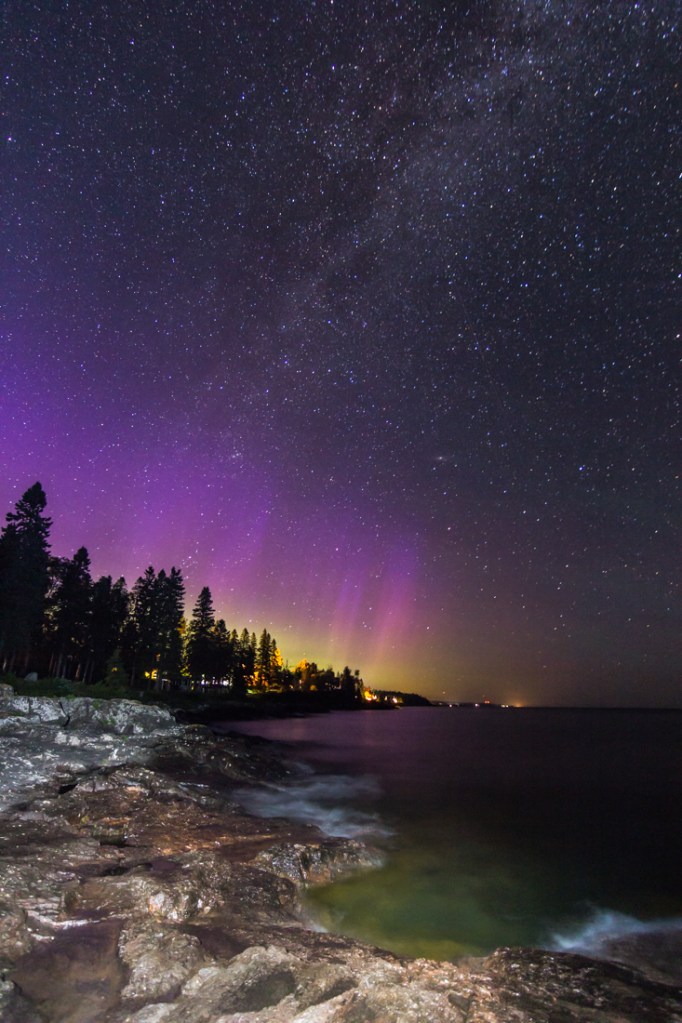
Purples and reddish aurora with greenish yellow base.Green and pinkish aurora on New Year’s Eve!Greens, yellows and reds.
It is always fun to look at the back of the camera when photographing aurora to see what shows up that the naked eye isn’t seeing.
Another question I am getting a lot is “When, where and how often can we see the lights?”
I have seen northern lights during all four of our seasons. Personally, I have no “best” season for viewing. The winter months are great because the nights are so long and dark. I have seen aurora displays at 5PM on winter nights all the way to the morning hours. Summer is nice because it can be a lot more tolerable weather-wise to be out at night. When I think of my top 4-5 displays I have seen, they span the four seasons. Last fall and 1995 were a couple of the best I have seen. A cold, winter night on Deeryard Lake in Lutsen, many years ago was another top display. Last summer in June we had possibly the best I have witnessed. There is an eleven year solar cycle which contains a “solar maximum” and “solar minimum” which has to do with sunspots and frequency of sun events that can cause northern lights. I believe we hit the max a couple years ago and are on the downslope. We are still getting and will still get displays though. More science I need to read up on…
If you are not into the science of it yourself, you can increase your odds of seeing them by simply watching certain websites or by installing an app on your phone to notify you if there is activity expected. I look at Spaceweather.com weekly and have an Aurora Notifier app on my phone. I also peruse a couple websites and Facebook pages that have enthusiasts as members who can decipher all the data and predict the lights quite well. The best rescource I have is a Facebook group called the Great Lakes Aurora Hunters. If there is a sun event, you will hear about it there. If there is a chance for aurora in the coming days, you will hear about it there. If there are lights happening anywhere in our region, you will see real-time reports.
As far as North Shore locations for viewing the lights, here are a few tips. I’ll base this on the typical viewer and not a photographer’s point of view.
Your best bet during a standard show would be to head inland, somewhere up over the Sawtooth Mountains. I like to head to one of the many lakes in the area. You can do a quick Google Map search for the area you may be vacationing in. Find a lake or open area with a nice view to the North. Boat landings are a good start. The lights can be in all directions at times, but a smaller display may be best viewed looking north. If you are on Lake Superior and can’t get inland, you’ll still want to find a nice point of land that sticks out a bit affording you a view north. Some of the best places to go would be the Gunflint, Caribou and Sawbill trails for inland viewing. On a good night, the Grand Marais harbor can give you a view in the right direction if you get out towards the breakwall. As you go west/southwest on 61, the Sawtooth Range gets in the way a bit so you’ll have to find a point of shore that sticks out a bit and orients you northish.
Time of night is a tough call. Not everyone can pull an “all nighter” and wait for it to happen. Occasionally I have seen them go from sunset to sunrise, but that isn’t always the case. I like to tell people to head out shortly after sunset when the skies first get dark. Give it a chance and wait a couple hours if you aren’t seeing anything. If you can’t stay out, set an alarm for after midnight and go take another look. Things can change fast.
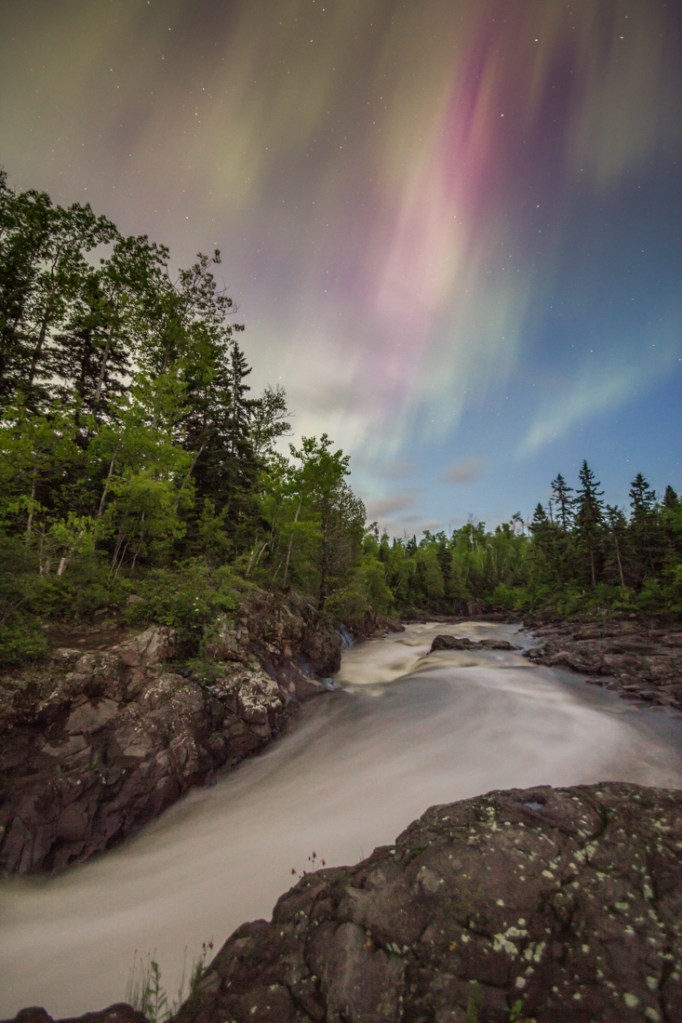
Summer aurora over the Temperance
I’ll leave you with a few more tips and a checklist for heading out to view the lights…
If you are able, plan your hunt around the moon cycle. The less moon the better for viewing, although the above photo was taken in near full moonlight during an epic aurora event. The darker the better, typically though.
Bring a group! It’s always more fun and can fight the boredom of waiting if you are with friends.
Look for other night sky landmarks and phenomenon while out hunting. Milky Way, meteors, International Space Station. Our night skies are quite amazing.
Checklist
Bug spray!!
Chairs and blankets
Telescope for star gazing
Headlamps and flashlights for getting around
Star chart for identifing constelations and stars
Full tank of gas
Hot chocolate, coffee or other beverage
Snacks
And most of all – Patience!
I hope this helps you find and experience the amazing aurora borealis on your next trip North. Feel free to send me any other questions you may have and I’ll do my best to answer. Next blog post will be tips for finding another sought after north shore treasure, the moose!! Stay tuned and Thank you!
More and more signs of spring are appearing daily in the northwoods. We have had some great spring weather and the rivers are free from winters icy grip and flowing free to Lake Superior. The inland lakes are still melting and we have had recent rain. The waterfalls are fantastic right now for spring viewing! The woods are almost free of snow in our area, though some pockets of good snow cover still exist in some areas. Just over a week ago I saw minus 17 one morning… The coming of spring has brought out the wildlife in force, too. In the past month I have seen many grouse, both roughed and spruce. Pine marten and fisher, a few of both. The robins, flickers, geese and ducks are all back on the roadways and open waters. Signs of wolves on the roads have also been observed. I had one brief sighting and i’ll include a photo below. And the moose! The moose seem to have reappeared after being fairly scarce the past few winter months. Nice to see things coming “alive” in the forest.
Things will be greening up soon, flowers blooming, boats on the lakes, fish on the stringer and before we know it, we’ll be cooling our way into fall, wondering where spring and summer went. Get out often and enjoy the seasons as they come and go.
Here are photos from the past few weeks as winter let go…
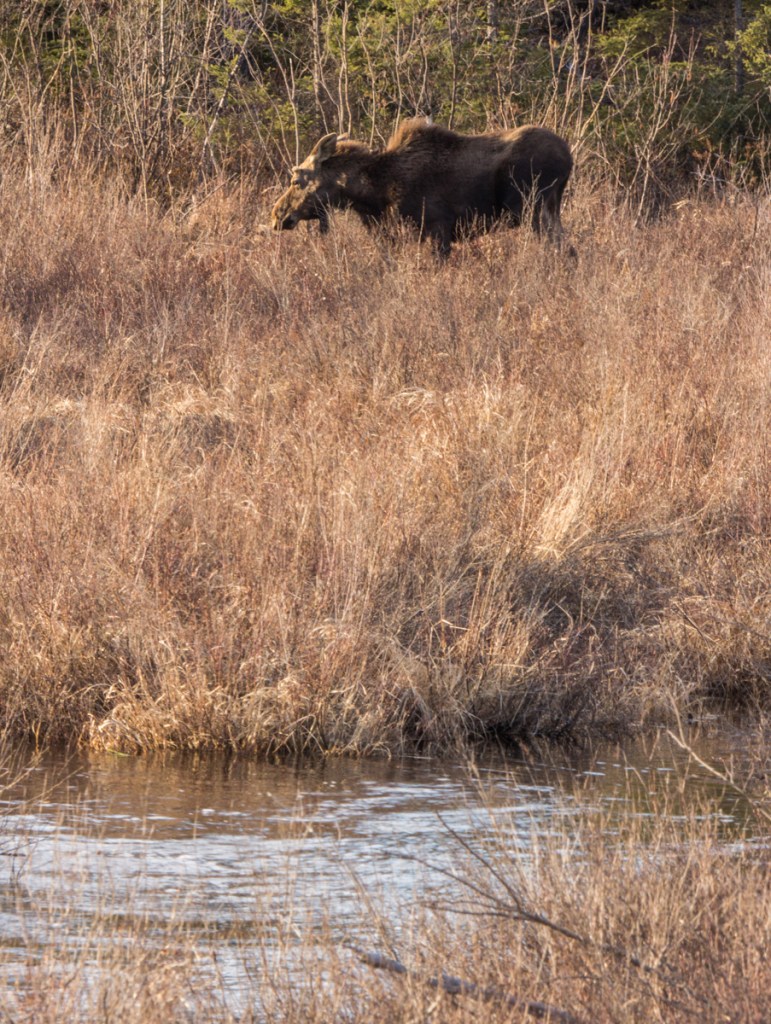
Bull moose skirting a creek edge in Superior National Forest. I’ve noticed a lot of moose activity in the form of tracks, scat and a couple sightings!One of many spruce grouse finding gravel on the roadway… Superior National Forest
One of many spruce grouse finding gravel on the roadway… Superior National Forest
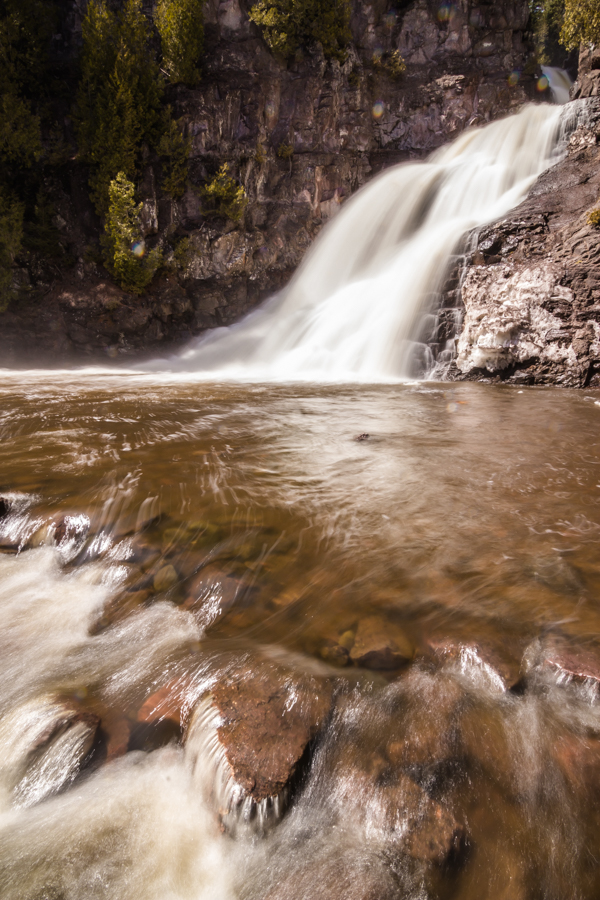
Just a small poke of antler coming up on this bull moose this week.Like I said, the waterfalls right now… Caribou Falls on the Caribou river. I have a previous blog post about this river.
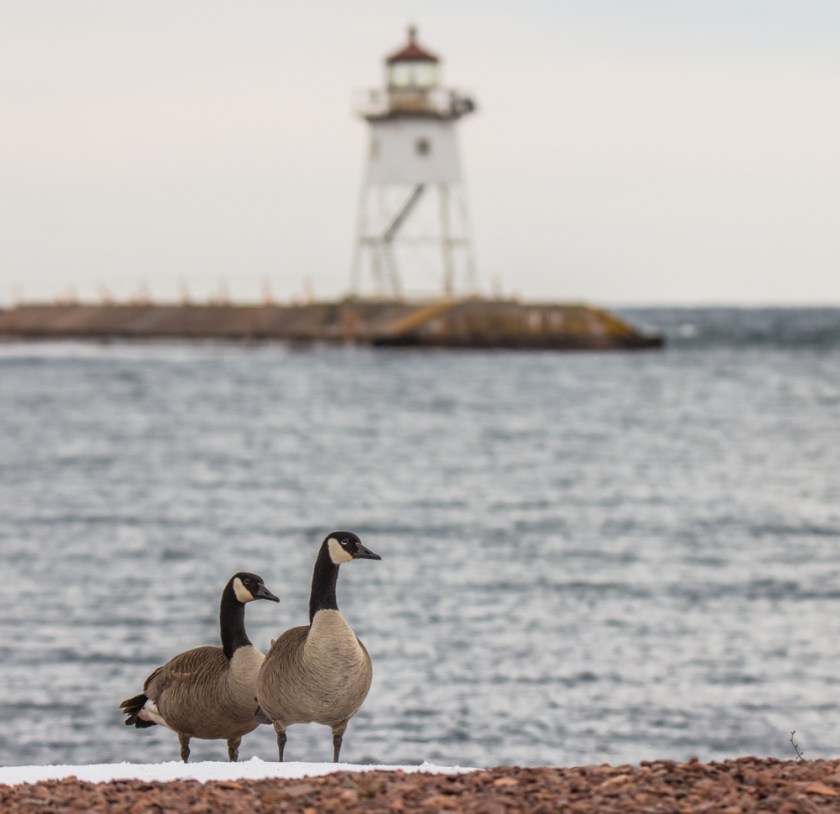
Canadian geese – Spring arrivals at Grand Marais harbor.
Bald Eagle at the Baker Lake entry point to the BWCA last weekend. Some open water and waterfoul had his attention…Just after ice-out on this little beaver pond. Already out and working on the lodge…Another look at a beauty moose this week in Superior National Forest.
Thank you all for taking a look at some spring scenes from the past couple weeks. I’ll update y’all next month. In the meantime, you can find weekly photos on Facebook and prints and other photos to view HERE. Take care, and Happy Spring!
Happy New Year, friends! I thought I’d share some recent photos from the past week or so. Winter has been slowly trying to arrive in the Northland. Inland there is plenty of snow for skiing and some snowmobiling and the ski hill at Lutsen is open with a brand new gondola servicing Moose Mountain. The lakes are frozen, though not where they should be for this time of year. It was 33 degrees this morning by the shore and rain/snow mix all day. It does not feel like January! I have had some oportunity to capture some fun scenes and photos that I haven’t shared on Facebook so here are some recent ones. Hope everyone is having a great start to the New Year.
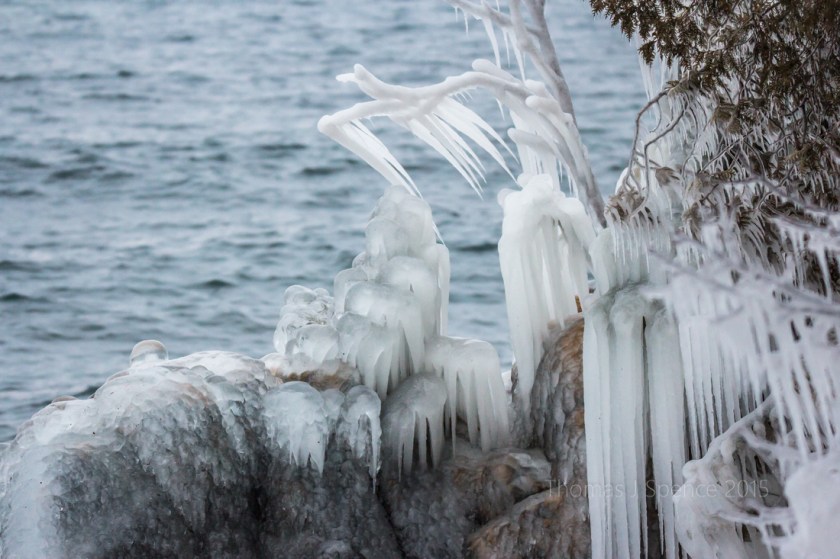
These first photos were taken on New Year’s Eve Day at a jobsite I have been working at. The shore was coated with spray from big waves when the temps were colder and the winds were right. Amazing ice…
Ice coated cedar on The Shore…Ice curtains…Natural ice sculptures…12/31/2015 – Croftville Ice
New Year’s Eve was pretty great too. After an early NYE party with family, I planned to go see the fireworks at Lutsen Mountains. On my way up Highway 61 I noticed some great northern lights through a hole in the clouds. I knew we had mostly thick clouds forecast, so I hadn’t planned on aurora. I was able to get the camera and get to a spot for about five photos before the clouds closed up and the sky went dark with clouds. The skies started clearing later and the lights were very faintly visible over the course of the evening. I never made it out to the fireworks! Here are a couple of the northern lights over the Temperance River along the Sawbill Trail near Tofte…
New Year’s Eve Aurora!!!! 12/31/2015Temperance River and the northern lights – New Year’s Eve 2015
These last few are random photos from the past week or so. Nice waves in Grand Marais, MN and some friends that hang out in my trees.
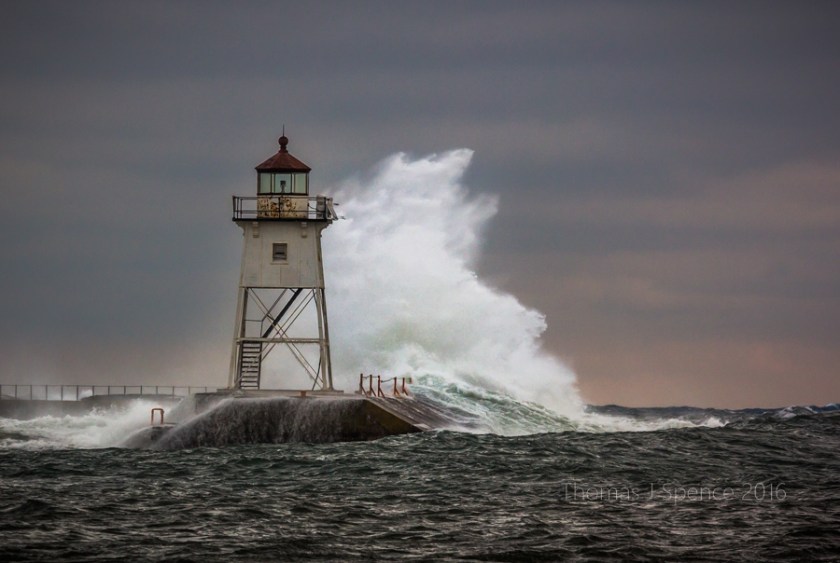
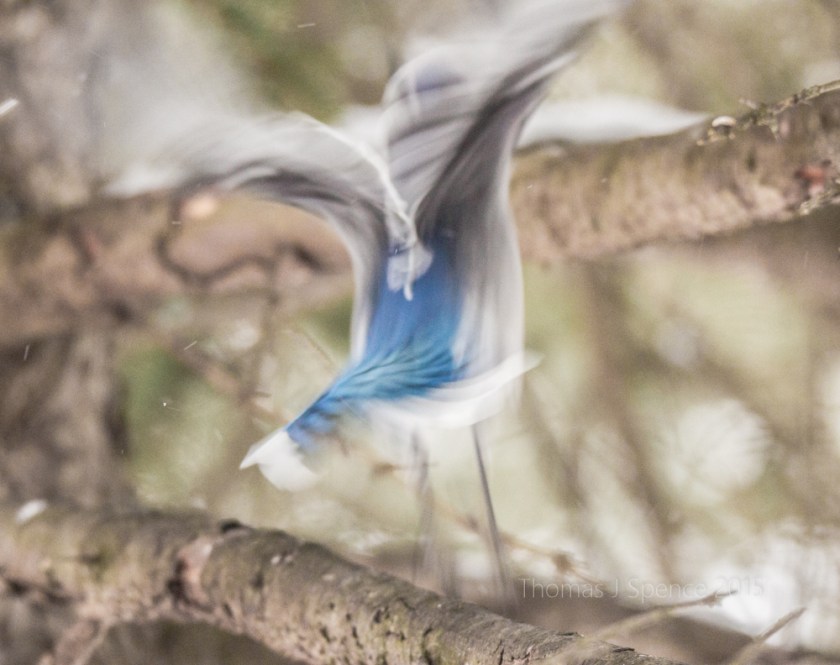
Southwest winds and big rollers crashing into the breakwall at Grand Marais, MN this week.Chattering squirrel in my tree…Chickadee catching a snowflake? 🙂One of the many that regularly drop in for a bite to eat…Blue jay jumping
Thanks for taking the time to check out this post. I appreciate all the support, print purchases, new followers and feedback on Facebook and here. Check back for updates and Photos Of The Week(link on the sidebar) Stay warm, friends.
Tom
Winter is in full swing and the thermometer has really shown it in recent weeks. Sounds like we are in for a reprieve from the sub-zero and windy conditions for a spell, though! The recent cold has been fantastic for winter photography along the lake and in the woods. Here are a few favorites that you may or may not have seen from recent hikes, drives and trips to The Lake.
You can see weekly posts on Facebook, too – www.facebook.com/ThomasjSpenceImages
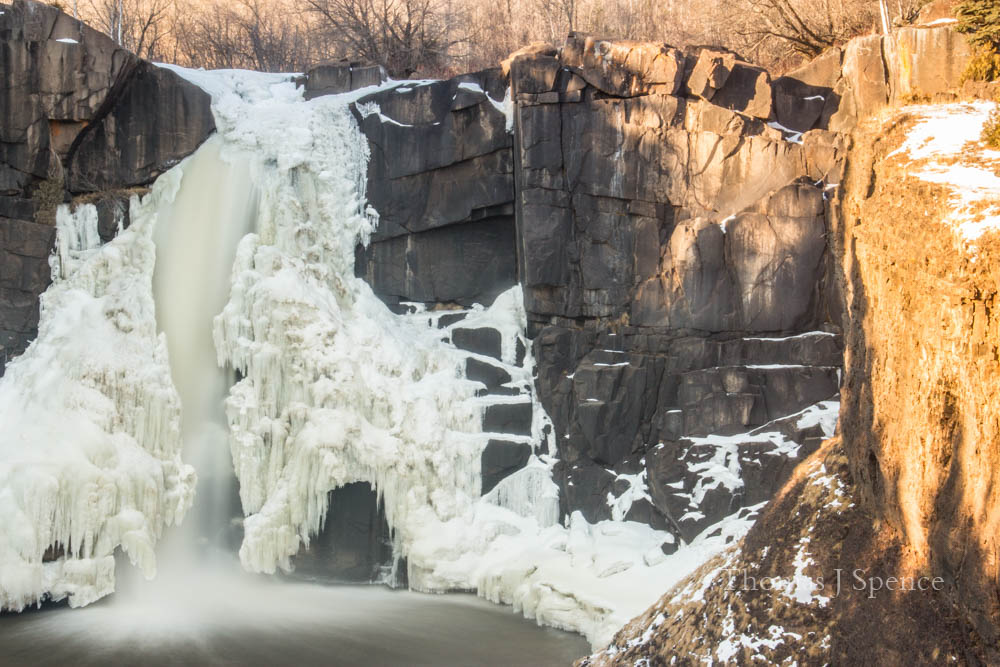
The High Falls on the Pigeon River in Grand Portage State Park. A MUST see in any season, though I prefer the winter ice that forms and the contrast of the snow on the cliff faces. Although, spring melt is a fantastic time to be there… and after a summer rain…A winter hike up to Palisade Head near Silver Bay, MN. Some billion years ago, rhyolitic lava flows formed these impressive formations along Lake Superior.The freighter Walter J McCarthy Jr. passes Schroeder, MN. The ships have been a regular site as the season comes to a close and the final loads are delivered around the Great Lakes. The locks will be closed in just a few days until the ice lets up in March.
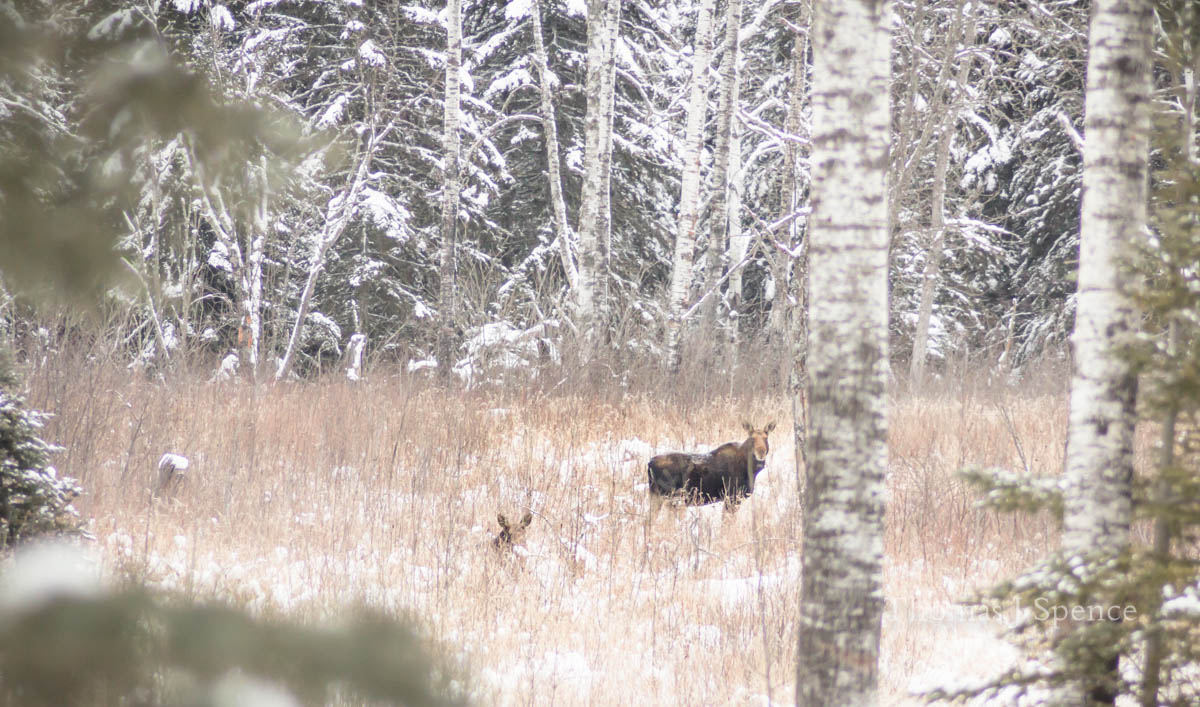
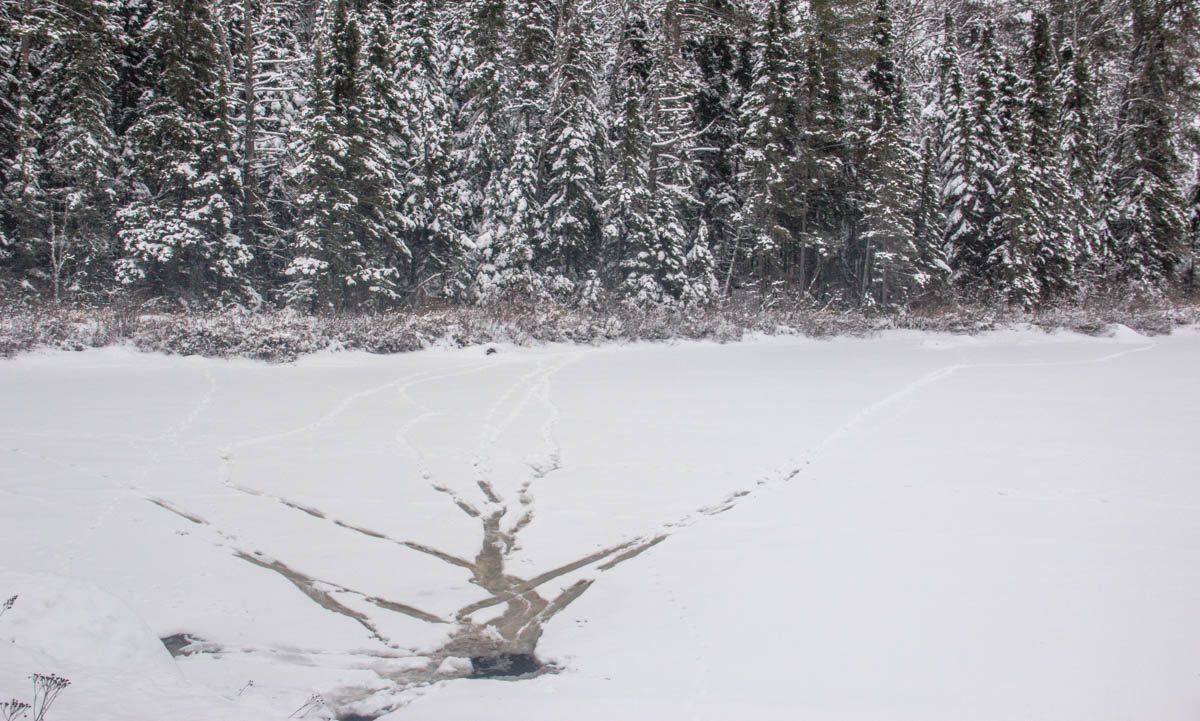
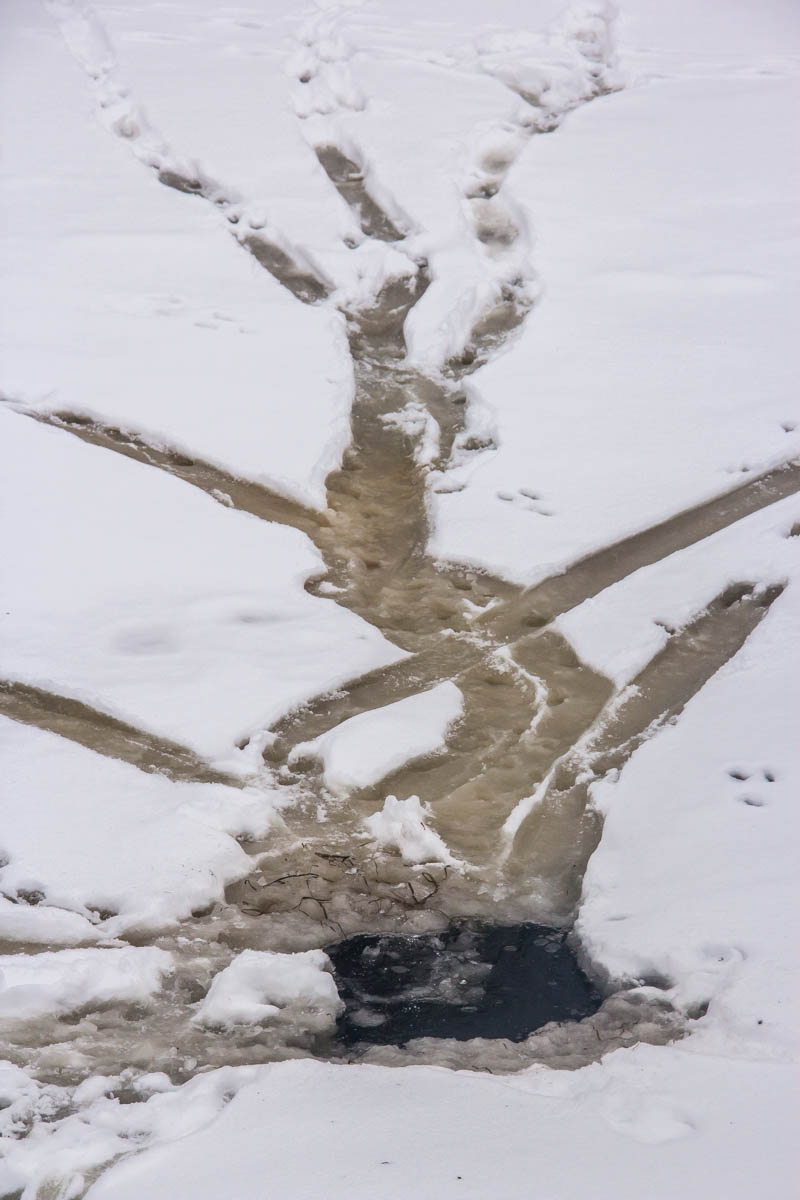
I came across a the remnants of an otter party! These playful critters love to run and slide in the snow and on the ice. They had made a hole near a spring and appeared to have had a great time sliding and slipping!Winter moose!!!! I have been happy to catch up with a group of moose quite often over the past few months. Glad to report that I am still seeing a few of them out and about. I hope you get to see one of these fantastic animals on your next visit to the North Shore.And finally, the Full Wolf Moon rising through the sea smoke on a VERY frigid January evening. Put a Lake Superior moon rise on your bucket list! I try not to miss one when I am around The Lake at the right time. There is a great moon/sun app called The Photographer’s Ephemeris that I would highly recommend to any sky-watcher.
This year I will keep you updated on the changing seasons and the changing light with frequent posts, so stay tuned! 🙂
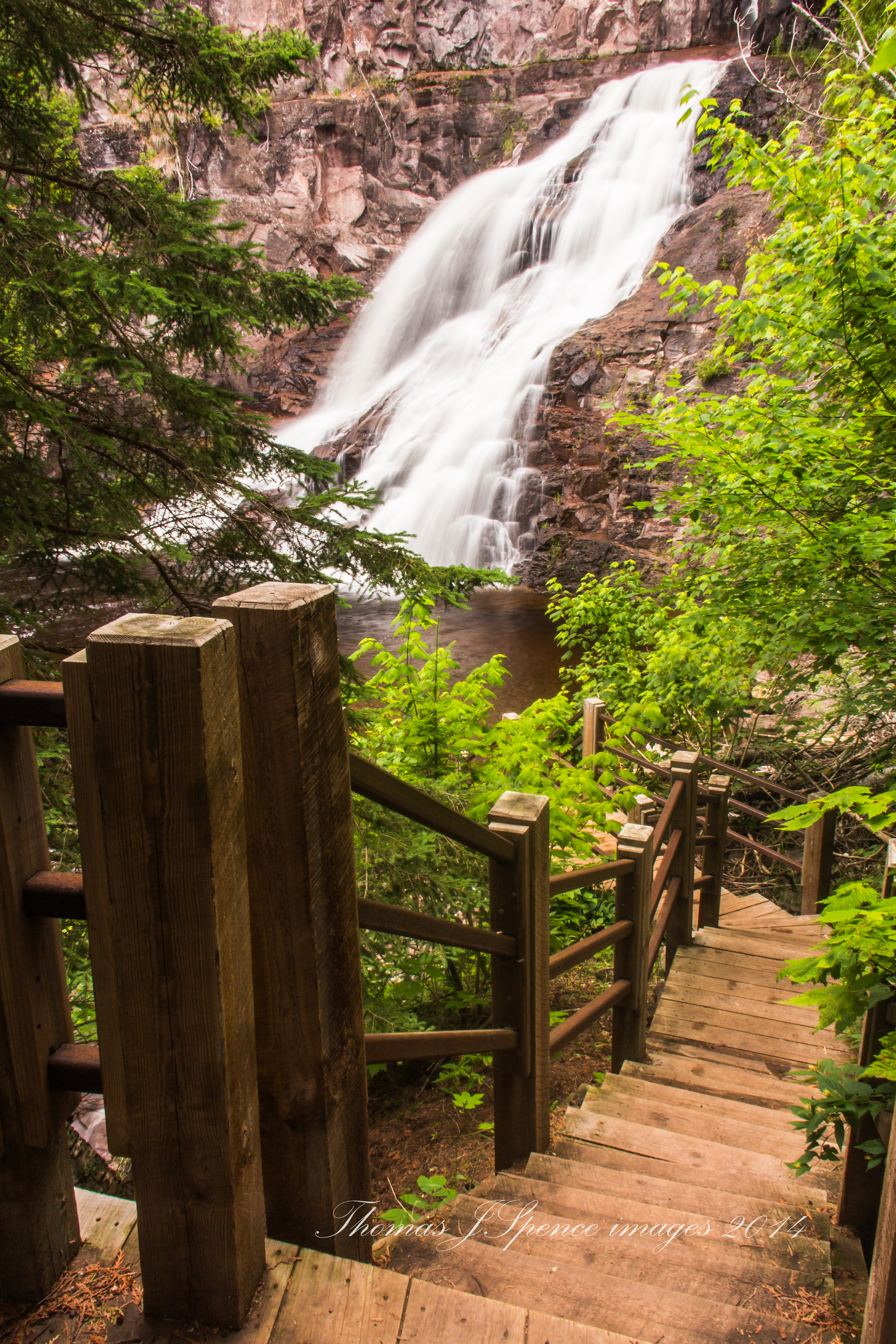
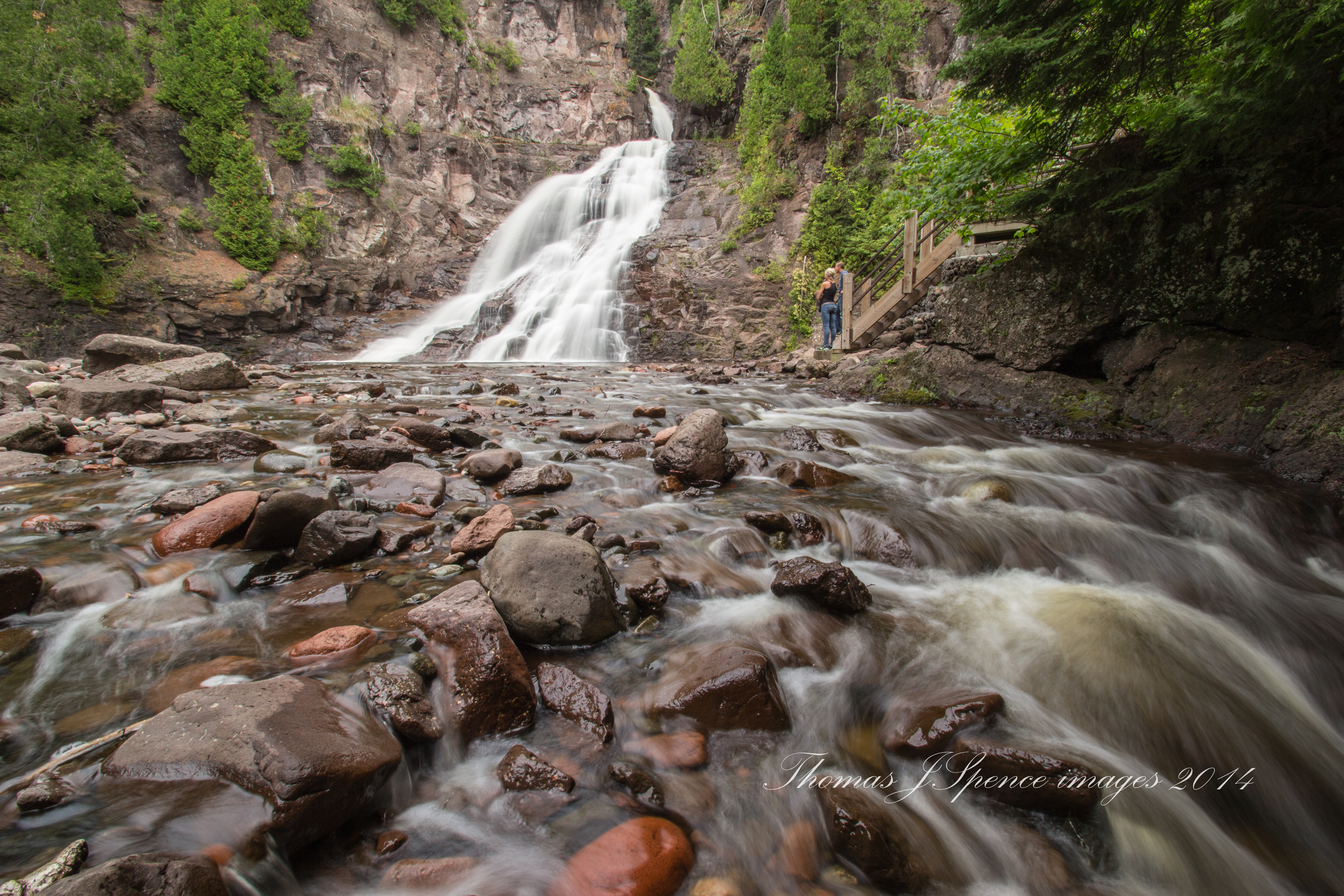
The hike to Caribou Falls on the Caribou River is a fairly short and easy walk in the woods. The stairs may be the only area that may deter some, but without them the climb down to the base of the falls would be dicey. This is an awesome hike any time of year, but winter may be my favorite. In the winter months we walk right up the frozen river on snowshoes or Sorels. Find the time to do this short, rewarding hike on your next trip to the North Shore.
Until next time… Tom
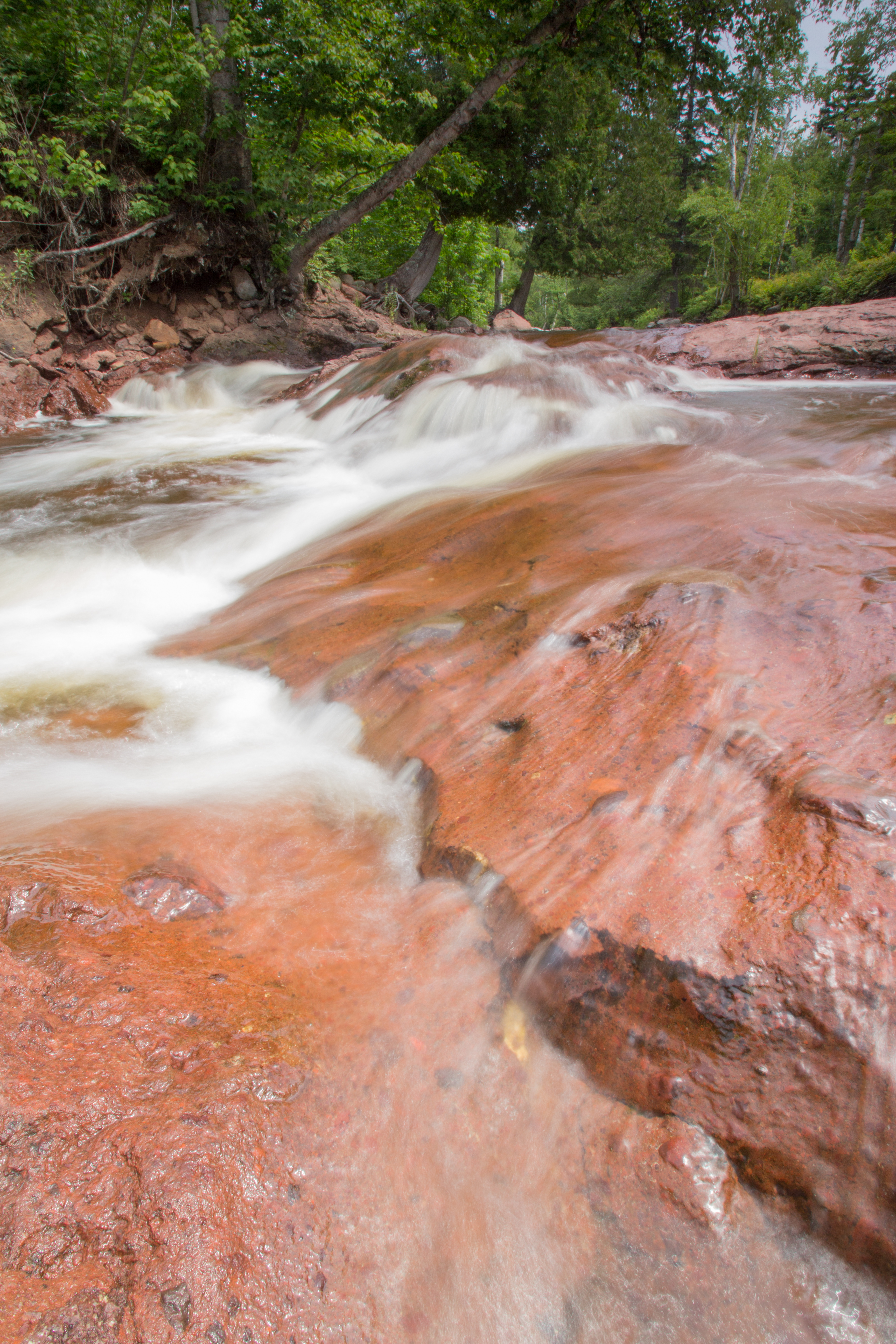
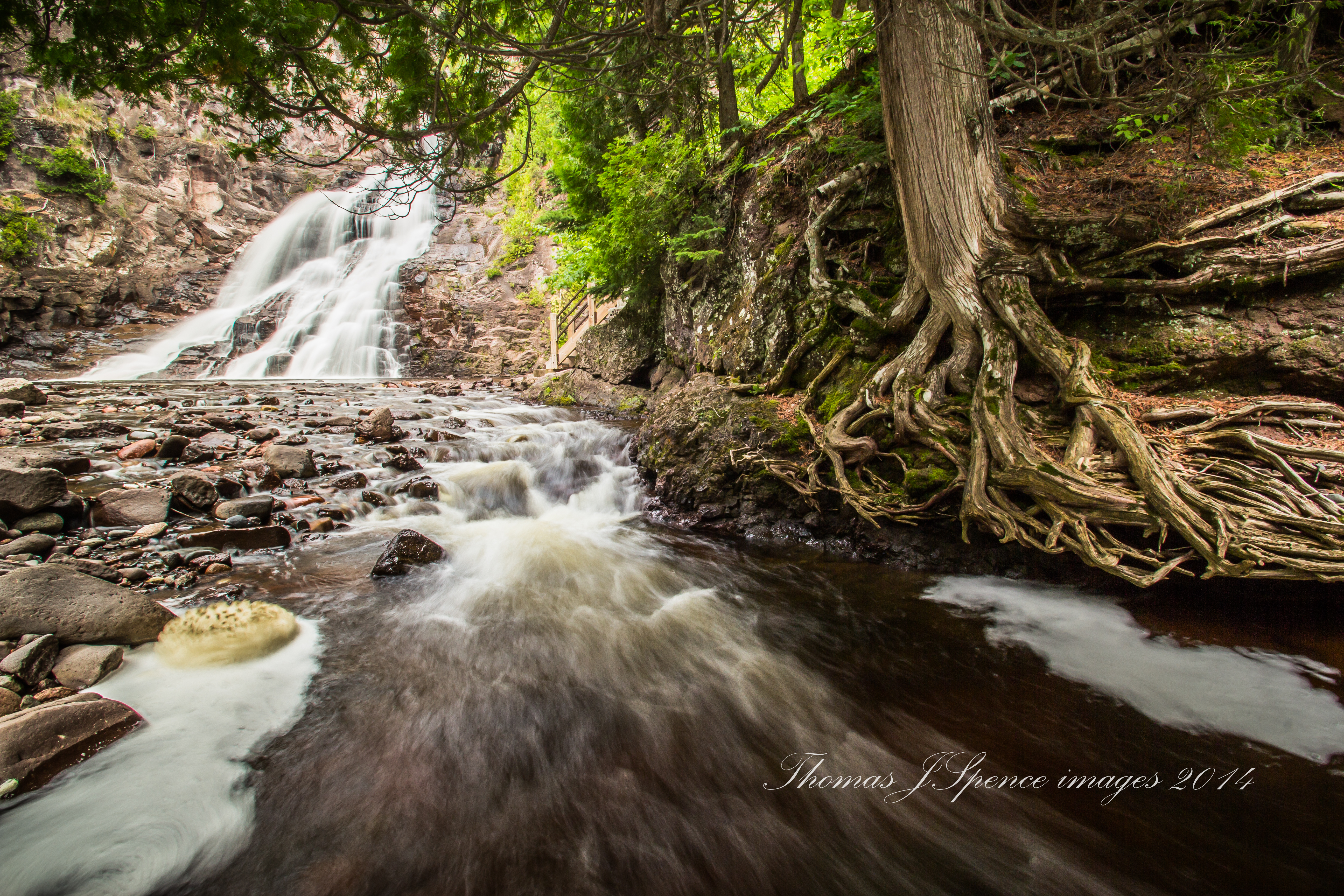
The half mile(one way) trail starts along the river just off Highway 61 at the parking area near the county line between Silver Bay and Schroeder.The Caribou River and the unique color of the river bottom…A solid, long staircase takes you from the ridge down to the base of Caribou Falls.Playing with a new camera (nikon AW120) that I can take underwater 🙂The falls and river – great area for a little picnic….Another fine falls view at Caribou Falls.This old cedar tree is pretty amazing the way it clings to the riverbank and weathers through the rise and fall of the river…









































 Thomas J. Spence Images